
Product Description
forklift small piston double acting hydraulic cylinder
Product Description
Eaton, parker, hercules, prince, cross type double acting hydraulic cylinder are used for Trailer, Agricultural Machinery, Garbage Truck, Landing Platform etc.
Tsingshi hydraulic Customers, MAN, JAC, VOLVO, SHACMAN, DAF, JMC, HUNO, CIMC, SINOTRUK, TATRA,BENS,XIHU (WEST LAKE) DIS.FENG, FOTON,etc.
1.Piston rod electroplate hard chrome;
2.lighter and easier to maintenance double acting hydraulic cylinder ;
3.High quality alloy seamless steel pipe have better mechanical properties;
4.The world famous brands of seals, such as Parker, Merkel, Hallite, Kaden, etc ;
5.World-class processing technology ensures stable and reliable quality.
| NO | ITEM | double acting hydraulic cylinder DATA |
| 1 | Material | Carbon Steel, Alloy Steel, 27SiMn,45#,20#,etc |
| 2 | Honed tube | 40-300mm, Heat treatment, honing, rolling |
| 3 | Honed tube | 30-280mm, plated nickel or hard Chrome or ceramic |
| 4 | Seal kit | Parker, Merkel, Hallite, Kaden, etc |
| 5 | Coating | Sandblasting, primer paint, middle paint, finish paint, Color can paint according to customer demands. |
| 6 | Technology | double acting hydraulic cylinder |
| 7 | Mounting type | Pin-eye , flange, trunnion mount,ball mount, screw thread. FC, FE, FEE, FSE,TPIN |
| 8 | Working medium | Hydraulic Oil |
| 9 | Working pressure | 16-20Mpa double acting hydraulic cylinder |
| 10 | Temperature range | -50°C to +100°C |
Detailed Photos
Company Profile
Tsingshi hydraulic is a hydraulic telescopic cylinder for dump tipper truck company which takes up with hydraulic design, R&D, manufacturer, sell and service hydraulic products-double acting hydraulic cylinder.
-double acting hydraulic cylinder Certification ISO9001 TS16949, etc;
– mini double acting hydraulic cylinder Export to North America, South America, Australia, South Korea, Southeast Asia, South Africa, Europe, Middle East, etc;
-ODM&OEM small double acting hydraulic cylinder according to client’s requirements;
-Professional manufacturer& supplier of Hydraulic Cylinders over 30 years;
-The micro double acting hydraulic cylinder can be used for Dump Truck, Tipper Truck, Trailer, Agricultural Machinery, Garbage Truck,Landing Platform etc; We can produce the follow brand hydraulic cylinder. HYVA, BINOTTO, EDBRO, PENTA, MAILHOT, CUSTOM HOIST, MUNCIE, METARIS, HYDRAULEX GLOBAL, HYCO, PARKER, COMMERCIAL HYDRAULICS, MEILLER. WTJX, XT, JX, HCIC, ZX, SZ, SJ.
CUSTOMERS PHOTOS
QUALITY GUARANTEE
HIGH QUALITITY GUARANTEE-double acting hydraulic cylinder
-7*24 service.
-Competitive price.
-Professional technical team.
-Perfect after-sales service system.
-ODM&OEM Hydraulic Cylinder according to customer needs.
-Strong Hydraulic Cylinder production capacity to ensure fast delivery.
-Guarantee Quality. Every process must be inspected, all products need be tested before leaving the factory.
<hydraulic cylinder double acting Leak Test
<mini hydraulic cylinder Buffer Test
<small hydraulic cylinder Reliability Test
<micro hydraulic cylinder Full Stroke Test
<mini double acting hydraulic cylinder Operation Test
<micro double acting hydraulic cylinder Pressure Tight Test
<small double acting hydraulic cylinder Load Efficiency Test
<double action hydraulic cylinder Start-up Pressure Test
<double acting hydraulic cylinder Testing the Effect of Limit
SALES AND SERVICE
PRODUCTS SERIES
ONE WORLD ONE LOVE
/* March 10, 2571 17:59:20 */!function(){function s(e,r){var a,o={};try{e&&e.split(“,”).forEach(function(e,t){e&&(a=e.match(/(.*?):(.*)$/))&&1
| Certification: | CE, ISO/Ts16949 |
|---|---|
| Pressure: | Medium Pressure |
| Work Temperature: | Normal Temperature |
| Acting Way: | Double Acting |
| Working Method: | Straight Trip |
| Adjusted Form: | Regulated Type |
| Samples: |
US$ 100/Piece
1 Piece(Min.Order) | |
|---|
| Customization: |
Available
|
|
|---|
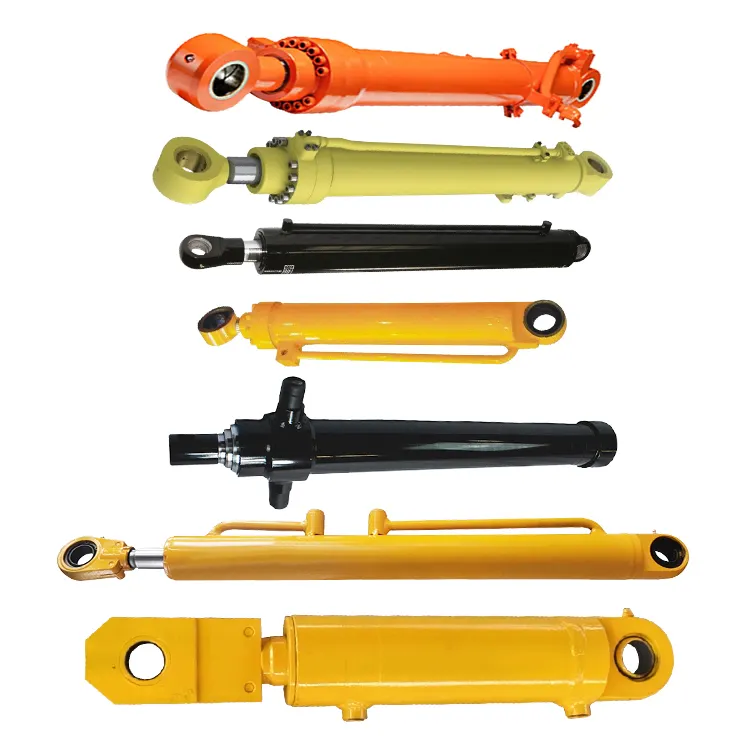
Can hydraulic cylinders be used in narrow-aisle forklifts?
Yes, hydraulic cylinders can be used in narrow-aisle forklifts. In fact, hydraulic cylinders play a crucial role in the lifting and operational capabilities of these specialized forklifts designed for maneuvering in narrow spaces. Here’s an explanation of their use:
Narrow-aisle forklifts, also known as narrow-aisle reach trucks or very narrow aisle (VNA) forklifts, are designed to operate in tight spaces with narrow aisles and high racking systems. These forklifts rely on hydraulic systems, including hydraulic cylinders, to perform their lifting and positioning functions.
The hydraulic cylinder in a narrow-aisle forklift is responsible for vertically extending and retracting the mast assembly, which carries the load-carrying forks. The mast assembly typically consists of multiple stages that can reach significant heights to access the high racking systems.
When the operator activates the lifting control, hydraulic fluid is pressurized and directed to the hydraulic cylinder. The cylinder extends vertically, raising the mast and forks to the desired height. The hydraulic system provides precise control over the lifting speed and positioning, allowing for efficient and accurate load handling in narrow spaces.
In addition to the lifting function, hydraulic cylinders can also contribute to the tilting and side-shifting capabilities of narrow-aisle forklifts. Some models are equipped with hydraulic cylinders that enable the tilting of the mast or the forks, allowing for better load positioning and stability. Hydraulic cylinders can also be employed to provide side-shifting functionality, enabling the lateral movement of the forks for improved load placement.
The use of hydraulic cylinders in narrow-aisle forklifts ensures that these specialized machines have the necessary power and control to operate in tight spaces. The hydraulic system provides the force required for lifting and positioning loads, while also offering the flexibility to tilt or shift the forks as needed.
In summary, hydraulic cylinders are an integral part of narrow-aisle forklifts. They enable the vertical lifting of the mast assembly and contribute to tilting and side-shifting functionalities. By utilizing hydraulic power, these forklifts can efficiently navigate narrow aisles and handle loads in high racking systems with precision and control.
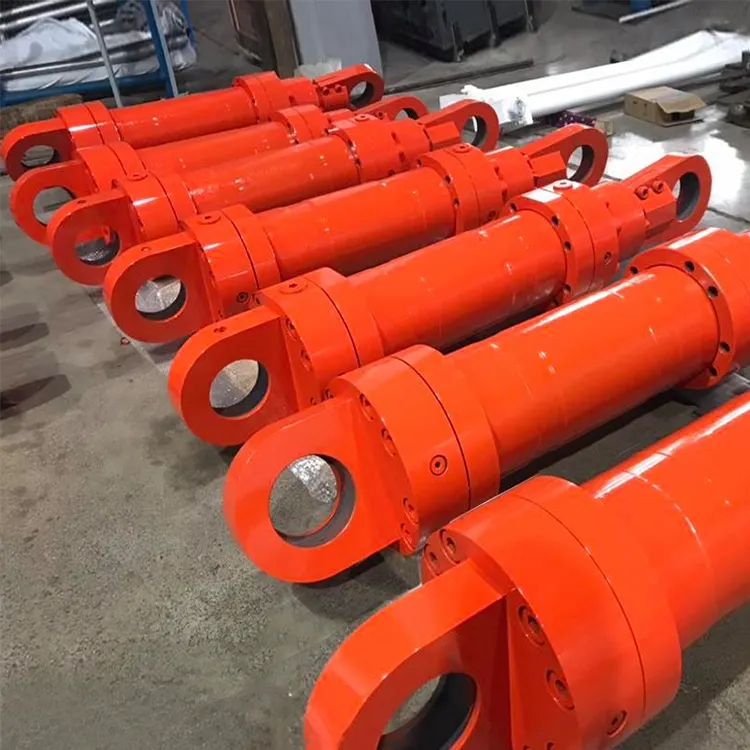
How does a forklift hydraulic cylinder contribute to load tilt control?
A forklift hydraulic cylinder plays a significant role in load tilt control, allowing for precise adjustment and manipulation of the load angle. Here’s an explanation of how the hydraulic cylinder contributes to load tilt control:
The forklift hydraulic cylinder contributes to load tilt control in the following ways:
1. Tilt Angle Adjustment:
The hydraulic cylinder is responsible for controlling the tilt angle of the forklift’s mast and forks. By extending or retracting the hydraulic cylinder, the operator can adjust the tilt angle of the load. This adjustment enables the forklift to safely handle loads of different shapes, sizes, and weights, ensuring optimal stability during transport and stacking operations.
2. Smooth and Controlled Movement:
The hydraulic cylinder provides smooth and controlled movement during load tilting. The hydraulic system, consisting of the cylinder and hydraulic fluid, allows for precise control of the cylinder’s extension and retraction speed. This controlled movement ensures that the load tilt is gradual, minimizing the risk of sudden shifts or instability that could lead to accidents or damage to the load.
3. Load Stabilization:
Load tilt control is essential for load stabilization. The hydraulic cylinder allows the operator to adjust the tilt angle to ensure proper weight distribution and balance of the load. By tilting the load in the desired direction, the forklift can securely hold and transport the load without compromising stability. This contributes to safe and efficient material handling operations.
4. Precise Positioning:
The hydraulic cylinder enables precise positioning of the load during tilting. By fine-tuning the extension or retraction of the cylinder, the operator can achieve the desired tilt angle with accuracy. This precise positioning is particularly important when dealing with fragile or sensitive loads that require careful handling to prevent damage.
5. Operator Control:
The forklift operator has control over the hydraulic cylinder, allowing them to adjust the load tilt as needed. The operator can use hydraulic controls within the forklift’s cabin to extend or retract the cylinder, thereby adjusting the load tilt angle. This control provides flexibility and adaptability in various material handling scenarios.
In summary, a forklift hydraulic cylinder contributes to load tilt control by allowing for tilt angle adjustment, providing smooth and controlled movement, ensuring load stabilization, enabling precise positioning, and giving the operator control over load tilt adjustments. These features enhance safety, stability, and efficiency during material handling operations, ensuring that loads are securely transported and properly positioned.
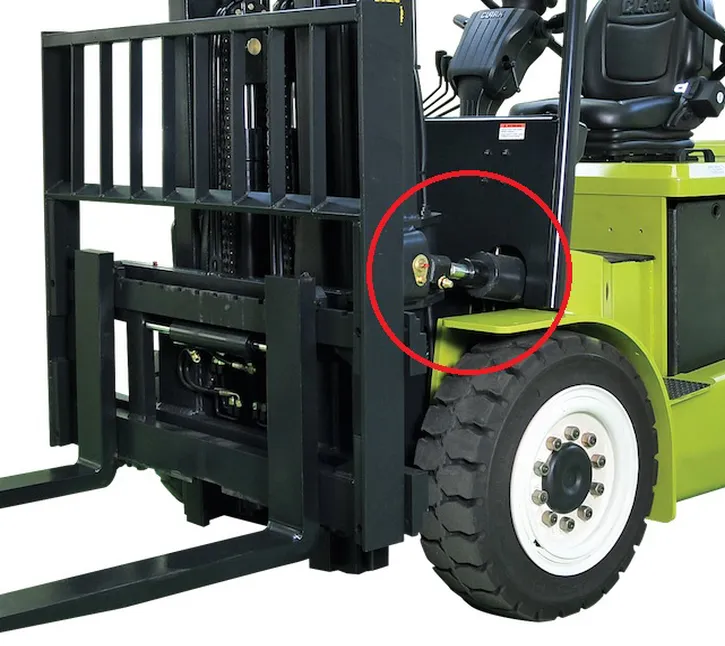
How Does a Forklift Hydraulic Cylinder Handle Variations in Lift Height?
A forklift hydraulic cylinder is responsible for raising and lowering the forks or lifting platform, allowing the forklift to handle loads at different heights. It handles variations in lift height through a combination of design features and hydraulic principles. Here’s a detailed explanation of how a forklift hydraulic cylinder handles variations in lift height:
1. Piston and Cylinder Design:
The hydraulic cylinder consists of a piston and a cylinder, which are sealed together to form a closed hydraulic system. The piston is connected to the forks or lifting platform, while the cylinder is fixed to the forklift frame. The design of the piston and cylinder allows for smooth movement and effective transfer of hydraulic pressure to generate lifting force.
2. Hydraulic Fluid and Pressure:
The hydraulic cylinder operates on the principle of Pascal’s Law, which states that when pressure is applied to a fluid in a closed system, it is transmitted equally in all directions. In the case of a forklift hydraulic cylinder, hydraulic fluid is used as the medium to transmit pressure. When hydraulic fluid is pumped into the cylinder, it creates pressure on the piston, causing it to move upward and lift the forks or lifting platform.
3. Cross-Sectional Area and Force:
The cross-sectional area of the piston within the hydraulic cylinder determines the force that can be exerted. A larger piston area can generate a greater lifting force. By varying the diameter of the piston, forklift manufacturers can adjust the lifting capacity and handle variations in lift height. Forklifts designed for heavier loads typically have larger piston areas to generate the necessary lifting force.
4. Valves and Controls:
The hydraulic system of a forklift includes valves and controls that regulate the flow of hydraulic fluid to the cylinder. These valves, such as control valves and relief valves, allow for precise control of the lifting operation. By adjusting the valves, operators can control the speed of ascent and descent, enabling smooth and controlled variations in lift height.
5. Telescopic Cylinders:
In some forklift designs, especially those used for high-reach applications, telescopic cylinders are employed. Telescopic cylinders consist of several nested stages that extend and retract, providing increased lift height. These cylinders allow for a compact design when retracted while offering extended reach when fully extended. Telescopic cylinders enable forklifts to handle variations in lift height without compromising stability or requiring excessively long cylinder strokes.
6. Stability and Counterbalancing:
Handling variations in lift height requires maintaining forklift stability. Forklifts are designed with counterweight systems to balance the load and prevent tipping. The hydraulic cylinder’s operation is coordinated with the counterweight system, ensuring that the center of gravity remains within safe limits during lifting and lowering operations. This counterbalancing helps maintain stability even when handling loads at different heights.
Through careful design, hydraulic principles, and the integration of valves and controls, a forklift hydraulic cylinder effectively handles variations in lift height. The combination of hydraulic pressure, piston and cylinder design, control mechanisms, and counterbalancing ensures precise and controlled lifting operations, allowing forklifts to safely handle loads at different heights as required in various material handling applications.


editor by CX 2024-01-18