
Product Description
Forklift Spare Parts Steering customized hydraulic Cylinder
Product Description
| Piston diameter | Max. 200mm, customizable |
| Rod diameter | Max. 160mm, customizable |
| Stroke | Max. 2500mm, customizable |
| Pressure | 16~25Mpa |
| Operating temperature | -40~120 ºC |
| OEM | Accepted |
| MOQ | 1pcs |
We could customized per your drawing!
OTHER HYDRAULIC CYLINDERS
Company Profile
About US:
Tianjian Hydraulic. is a leader in the engineering design and manufacture of high pressure hydraulic cylinders that are widely used in the fields of mining, metallurgy, construction machinery, marine, offshore, water engineering, wind power, hydraulic press, agricultural machinery, and so on.
The Tianjian team has almost 8 years experience delivering innovative and dependable solutions to meet OEM high pressure hydraulic cylinder needs.
If possible, when contact with us, please apply information as below
|
Bore |
Rod |
Stroke |
Work Pressure |
Mounting |
Work environment |
|
|
|
|
|
|
|
Quality Assurance
| Inspection Type | Inspection Standard |
| Raw Material Inspection | Before storage, QC takes the measurement of the raw materials. |
| Process Material Inspection | During the production, QCs conduct a random inspection. Before the hydraulic cylinder parts transferred to the next process, QCs takes inspection. |
| Final Function Testing | All the hydraulic cylinders take hydraulic function test |
FAQ
FAQ:
1, What does your company do?
A: we are a supplier of high quality Hydraulic Cylinders for mining, construction, waste management, forestry, agriculture, etc.
2, Are you a manufacture or a trading company?
A: We are a manufacturer. Warmly welcome to visit us!
3, What certificate do you have?
A: All our factories are ISO certificated. And our main suppliers of materials and parts are with CE, RoHS, and UL certificates.
4, How long is your delivery time?
A: The delivery time depends on different products and quantity. The cylinder usually need about 15-60 days.
5, Can you make parts as customer’s requirement or drawing?
A: Yes, we can OEM for you as your drawings. Our engineer also can give you professional support for technical suggestions.
6, What kind of payment terms do you accept?
A: We prefer T/T through bank. 30% when order is confirmed and 70% before shipment. Can be negotiated.
7, What is your warranty policy?
A: All our products are warranted for 1 full year from date of delivery against defects in materials and workmanship. This warranty does not cover parts that are worn out through the course of normal operation or are damaged through negligence. We serious remind that unclean hydraulic oil will definitely cause damage to your Hydraulic components. And this damage is not included in the warranty range. So we strongly suggest you to use new clean oil or make sure the system oil are clean when using our parts
/* March 10, 2571 17:59:20 */!function(){function s(e,r){var a,o={};try{e&&e.split(“,”).forEach(function(e,t){e&&(a=e.match(/(.*?):(.*)$/))&&1
| After-sales Service: | 10 Years |
|---|---|
| Warranty: | 1 Year |
| Material: | Carbon Steel |
| Surface Treatment: | Baking Paint |
| Customized: | Customized |
| Standard: | Nonstandard |
| Samples: |
US$ 200/Piece
1 Piece(Min.Order) | |
|---|
| Customization: |
Available
|
|
|---|
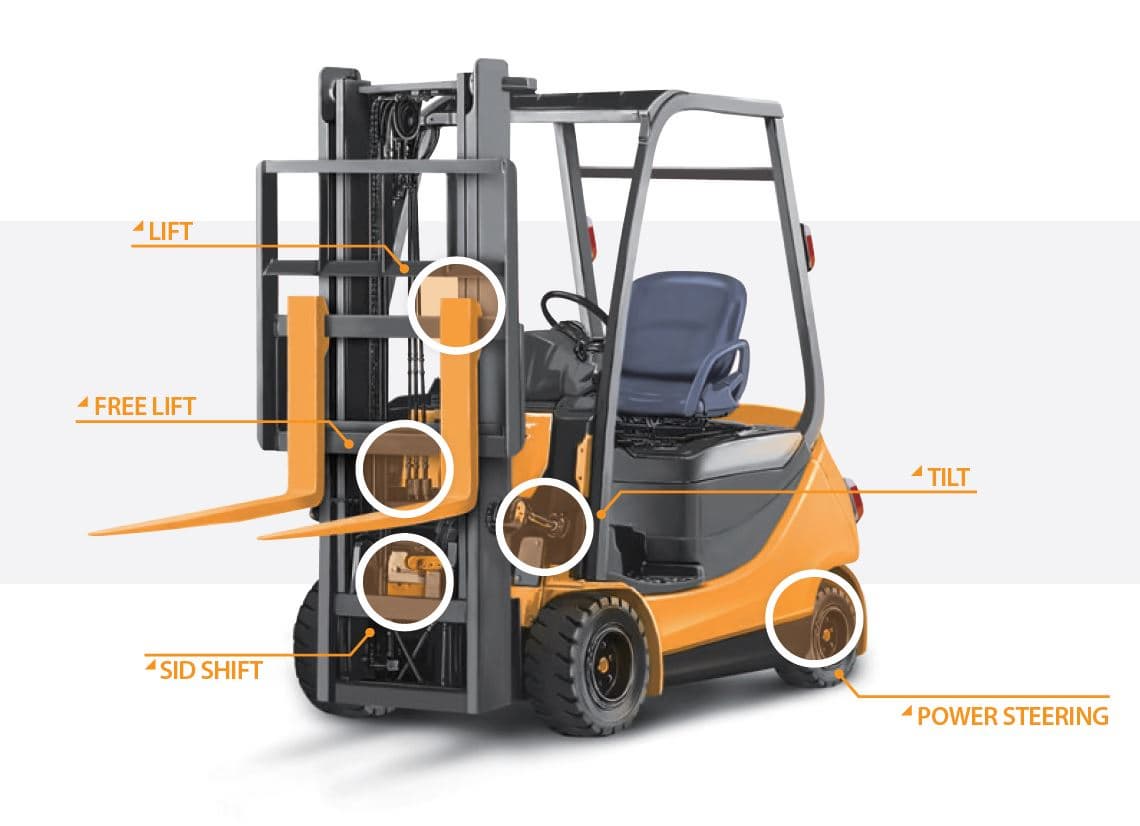
What are the Advantages of Using Hydraulic Cylinders in Forklifts?
Hydraulic cylinders play a pivotal role in the operation of forklifts, providing several advantages that contribute to their efficiency, versatility, and overall performance. Here are the key advantages of using hydraulic cylinders in forklifts:
- High Lifting Capacity:
- Smooth and Controlled Operation:
- Adjustable Lift Heights:
- Quick Response Time:
- Reliable and Robust:
- Simple and Compact Design:
- Wide Range of Applications:
- Ease of Maintenance:
Hydraulic cylinders are capable of generating significant lifting forces, allowing forklifts to handle heavy loads with ease. The hydraulic system’s ability to generate high pressure and transfer it to the cylinder results in impressive lifting capacities, enabling the forklift to lift and transport substantial loads efficiently.
Hydraulic cylinders provide smooth and controlled operation during lifting and lowering processes. The hydraulic fluid, acting as the medium, offers excellent resistance to compression and allows for precise control over the movement of the piston. This enables operators to perform delicate maneuvers and position loads accurately, contributing to safe and efficient material handling.
Hydraulic cylinders allow for adjustable lift heights in forklifts, providing versatility in various material handling tasks. By controlling the amount of hydraulic fluid pumped into the cylinder, operators can raise or lower the forks or lifting platform to suit different load sizes, stacking heights, and clearance requirements. This adaptability enhances the forklift’s versatility and enables it to work efficiently in various environments.
Hydraulic systems, including hydraulic cylinders, offer rapid response times, resulting in swift lifting and lowering operations. When operators activate the hydraulic controls, the hydraulic fluid instantly transmits pressure to the cylinder, initiating the desired movement. This quick response time allows for efficient load handling, reduces cycle times, and improves overall productivity in material handling applications.
Hydraulic cylinders are known for their reliability and durability, making them suitable for demanding industrial applications. They are designed to withstand heavy loads, frequent use, and harsh operating conditions. With proper maintenance and regular inspections, hydraulic cylinders in forklifts can provide long service life and dependable performance, minimizing downtime and maintenance costs.
The design of hydraulic cylinders is relatively simple and compact, contributing to the overall compactness and maneuverability of forklifts. The compact size of the hydraulic cylinders allows for efficient integration within the forklift’s structure, optimizing space utilization and ensuring that the forklift remains agile and capable of maneuvering in tight spaces.
Hydraulic cylinders in forklifts find applications across a wide range of industries and material handling tasks. Whether it is lifting and stacking pallets, loading and unloading cargo, or handling heavy industrial equipment, the versatility and adaptability of hydraulic cylinders make them suitable for various tasks and environments.
Hydraulic cylinders are relatively easy to maintain, with routine inspections and preventive maintenance ensuring their optimal performance. Regular checks for leaks, proper lubrication, and component replacements as needed can help extend the lifespan of the hydraulic cylinders and contribute to the overall reliability and safety of the forklift.
The advantages offered by hydraulic cylinders in forklifts, such as high lifting capacity, smooth operation, adjustable lift heights, quick response time, reliability, compact design, versatility, and ease of maintenance, make them indispensable components in the material handling industry. These advantages contribute to enhanced productivity, improved safety, and efficient handling of loads in diverse work environments.
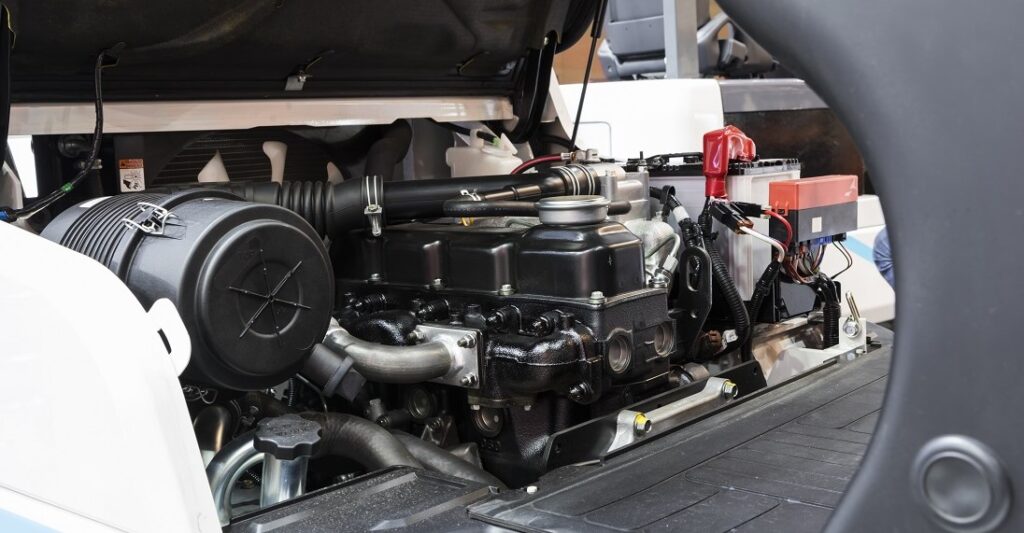
How does a forklift hydraulic cylinder contribute to smooth lifting and lowering?
A forklift hydraulic cylinder plays a crucial role in achieving smooth lifting and lowering operations. Here’s an explanation of how it contributes to this process:
The smooth lifting and lowering of a forklift’s load is made possible by the hydraulic cylinder working in tandem with the hydraulic system. The hydraulic cylinder contributes in the following ways:
1. Controlled Fluid Power:
The hydraulic cylinder utilizes controlled fluid power to lift and lower the load. When the operator activates the hydraulic system, hydraulic fluid is pumped into the cylinder, exerting pressure on the piston inside. This pressure creates a force that raises or lowers the load smoothly and evenly.
2. Piston and Cylinder Design:
The design of the hydraulic cylinder’s piston and cylinder bore contributes to smooth lifting and lowering. The piston is precisely machined to fit within the cylinder bore with minimal clearance. This tight fit, along with the use of seals and hydraulic fluid, helps minimize friction and ensure smooth movement of the piston within the cylinder.
3. Valve Control:
The hydraulic cylinder’s movement is controlled by valves in the hydraulic system. These valves regulate the flow of hydraulic fluid into and out of the cylinder. By adjusting the valve settings, the operator can control the speed and rate of lifting and lowering. The valves allow for precise control, enabling smooth and gradual movements of the load.
4. Load Balancing:
The hydraulic cylinder contributes to load balancing during lifting and lowering operations. By adjusting the extension or retraction of the cylinder, the operator can maintain a proper balance between the load and the forklift. This balance helps prevent sudden shifts or jerky movements, resulting in smoother and more stable lifting and lowering.
5. Damper Mechanisms:
In some forklift hydraulic systems, dampers or shock absorbers are incorporated to further enhance smooth lifting and lowering. These mechanisms help cushion the movements of the hydraulic cylinder, reducing any sudden jolts or vibrations. The dampers absorb and dissipate energy, resulting in smoother and more controlled load handling.
In summary, a forklift hydraulic cylinder contributes to smooth lifting and lowering operations through controlled fluid power, precise piston and cylinder design, valve control, load balancing, and the potential inclusion of dampers. These factors work together to provide operators with the ability to lift and lower loads smoothly, efficiently, and with enhanced control.
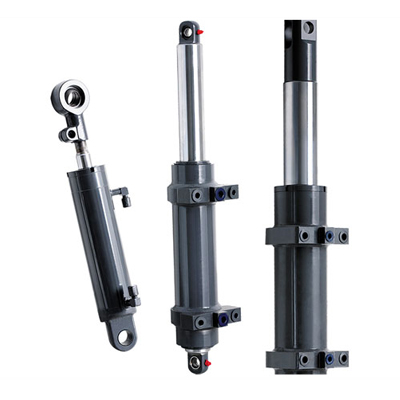
How does a forklift hydraulic cylinder assist in lifting loads?
A forklift hydraulic cylinder plays a critical role in assisting the lifting of loads. Here’s a detailed explanation of how it works:
When a forklift needs to lift a load, the hydraulic cylinder generates the necessary force to raise the load to the desired height. Here’s a step-by-step process of how the hydraulic cylinder assists in lifting loads:
1. Hydraulic Pressure:
When the operator activates the hydraulic controls of the forklift, hydraulic pressure is generated in the hydraulic system. This pressure is typically created by a hydraulic pump, which pressurizes the hydraulic fluid (usually oil) in the system.
2. Hydraulic Fluid Flow:
The pressurized hydraulic fluid is directed to the hydraulic cylinder through control valves and hoses. The fluid enters the cylinder through the inlet port, filling one side of the cylinder.
3. Piston and Piston Rod Extension:
As the pressurized hydraulic fluid enters the cylinder, it acts on one side of the piston. The force exerted by the fluid pushes the piston and the connected piston rod upward.
4. Load Lifting:
As the piston rod extends, it transfers the force to the load-bearing structure of the forklift, such as the mast assembly. The force exerted by the hydraulic cylinder enables the forklift to lift the load off the ground.
5. Load Stability:
The hydraulic cylinder assists in maintaining load stability during the lifting process. The controlled extension of the cylinder allows for smooth and precise lifting, reducing the chances of load tilting or instability.
6. Load Holding:
Once the load reaches the desired height, the hydraulic system can hold the load in place using a valve or a locking mechanism. This ensures that the load remains securely lifted until the operator decides to lower it.
The hydraulic cylinder’s ability to generate a significant amount of force allows forklifts to lift heavy loads efficiently. By controlling the flow of hydraulic fluid and adjusting the cylinder’s extension, the operator can precisely control the lifting speed and height.
In summary, a forklift hydraulic cylinder assists in lifting loads by utilizing hydraulic pressure to extend the piston and piston rod, transferring force to the load-bearing structure of the forklift. This hydraulic force enables the forklift to lift heavy loads, and the controlled extension of the cylinder ensures load stability and precise lifting capabilities.


editor by CX 2024-01-19