
Product Description
forklift small piston double acting hydraulic cylinder
Product Description
Eaton, parker, hercules, prince, cross type double acting hydraulic cylinder are used for Trailer, Agricultural Machinery, Garbage Truck, Landing Platform etc.
Tsingshi hydraulic Customers, MAN, JAC, VOLVO, SHACMAN, DAF, JMC, HUNO, CIMC, SINOTRUK, TATRA,BENS,XIHU (WEST LAKE) DIS.FENG, FOTON,etc.
1.Piston rod electroplate hard chrome;
2.lighter and easier to maintenance double acting hydraulic cylinder ;
3.High quality alloy seamless steel pipe have better mechanical properties;
4.The world famous brands of seals, such as Parker, Merkel, Hallite, Kaden, etc ;
5.World-class processing technology ensures stable and reliable quality.
| NO | ITEM | double acting hydraulic cylinder DATA |
| 1 | Material | Carbon Steel, Alloy Steel, 27SiMn,45#,20#,etc |
| 2 | Honed tube | 40-300mm, Heat treatment, honing, rolling |
| 3 | Honed tube | 30-280mm, plated nickel or hard Chrome or ceramic |
| 4 | Seal kit | Parker, Merkel, Hallite, Kaden, etc |
| 5 | Coating | Sandblasting, primer paint, middle paint, finish paint, Color can paint according to customer demands. |
| 6 | Technology | double acting hydraulic cylinder |
| 7 | Mounting type | Pin-eye , flange, trunnion mount,ball mount, screw thread. FC, FE, FEE, FSE,TPIN |
| 8 | Working medium | Hydraulic Oil |
| 9 | Working pressure | 16-20Mpa double acting hydraulic cylinder |
| 10 | Temperature range | -50°C to +100°C |
Detailed Photos
Company Profile
Tsingshi hydraulic is a hydraulic telescopic cylinder for dump tipper truck company which takes up with hydraulic design, R&D, manufacturer, sell and service hydraulic products-double acting hydraulic cylinder.
-double acting hydraulic cylinder Certification ISO9001 TS16949, etc;
– mini double acting hydraulic cylinder Export to North America, South America, Australia, South Korea, Southeast Asia, South Africa, Europe, Middle East, etc;
-ODM&OEM small double acting hydraulic cylinder according to client’s requirements;
-Professional manufacturer& supplier of Hydraulic Cylinders over 30 years;
-The micro double acting hydraulic cylinder can be used for Dump Truck, Tipper Truck, Trailer, Agricultural Machinery, Garbage Truck,Landing Platform etc; We can produce the follow brand hydraulic cylinder. HYVA, BINOTTO, EDBRO, PENTA, MAILHOT, CUSTOM HOIST, MUNCIE, METARIS, HYDRAULEX GLOBAL, HYCO, PARKER, COMMERCIAL HYDRAULICS, MEILLER. WTJX, XT, JX, HCIC, ZX, SZ, SJ.
CUSTOMERS PHOTOS
QUALITY GUARANTEE
HIGH QUALITITY GUARANTEE-double acting hydraulic cylinder
-7*24 service.
-Competitive price.
-Professional technical team.
-Perfect after-sales service system.
-ODM&OEM Hydraulic Cylinder according to customer needs.
-Strong Hydraulic Cylinder production capacity to ensure fast delivery.
-Guarantee Quality. Every process must be inspected, all products need be tested before leaving the factory.
<hydraulic cylinder double acting Leak Test
<mini hydraulic cylinder Buffer Test
<small hydraulic cylinder Reliability Test
<micro hydraulic cylinder Full Stroke Test
<mini double acting hydraulic cylinder Operation Test
<micro double acting hydraulic cylinder Pressure Tight Test
<small double acting hydraulic cylinder Load Efficiency Test
<double action hydraulic cylinder Start-up Pressure Test
<double acting hydraulic cylinder Testing the Effect of Limit
SALES AND SERVICE
PRODUCTS SERIES
ONE WORLD ONE LOVE
/* March 10, 2571 17:59:20 */!function(){function s(e,r){var a,o={};try{e&&e.split(“,”).forEach(function(e,t){e&&(a=e.match(/(.*?):(.*)$/))&&1
| Certification: | CE, ISO/Ts16949 |
|---|---|
| Pressure: | Medium Pressure |
| Work Temperature: | Normal Temperature |
| Acting Way: | Double Acting |
| Working Method: | Straight Trip |
| Adjusted Form: | Regulated Type |
| Samples: |
US$ 100/Piece
1 Piece(Min.Order) | |
|---|
| Customization: |
Available
|
|
|---|
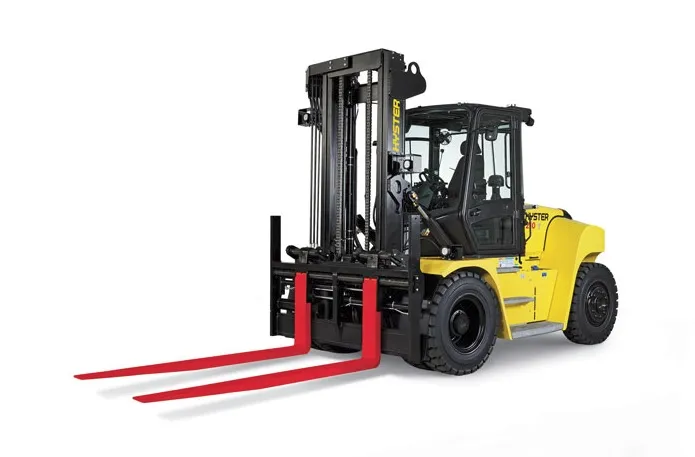
Can hydraulic cylinders be used in electric forklifts?
Yes, hydraulic cylinders can be used in electric forklifts. While electric forklifts rely on electric motors for propulsion, they still utilize hydraulic systems, including hydraulic cylinders, for various functions. Here’s an explanation of their role:
Electric forklifts commonly employ hydraulic cylinders in their lifting mechanism. The hydraulic cylinder generates the force required to lift and lower loads. The lifting mechanism typically consists of a hydraulic pump, control valves, hoses, and the hydraulic cylinder.
When the operator activates the lifting control, the electric motor powers the hydraulic pump, which pressurizes the hydraulic fluid. The pressurized fluid is then directed to the hydraulic cylinder, where it extends the piston rod, lifting the load. By controlling the flow of hydraulic fluid, the operator can precisely control the lifting speed and height.
In addition to the lifting mechanism, hydraulic cylinders may also be used in other parts of an electric forklift. For example, they can be employed in tilt mechanisms for tilting the mast or forks, in the steering system for maneuverability, or in the reach mechanism for extending and retracting the forks.
The use of hydraulic cylinders in electric forklifts allows for efficient and precise control over various lifting and operational functions. The hydraulic system provides the necessary force and flexibility required in lifting heavy loads and performing other essential tasks.
In summary, hydraulic cylinders can indeed be used in electric forklifts. They play a vital role in the lifting mechanism and other operational functions, enabling the electric forklift to perform lifting, tilting, steering, and reaching tasks with accuracy and efficiency.
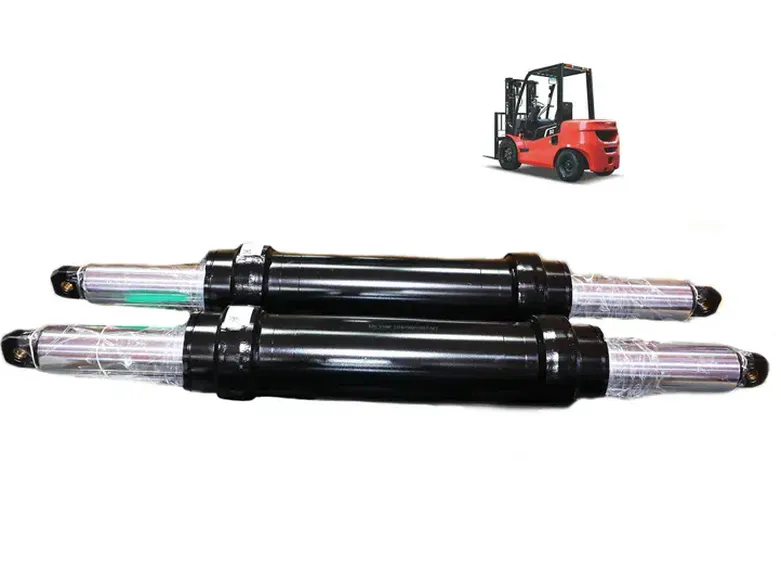
Can hydraulic cylinders be used in articulated forklifts?
Yes, hydraulic cylinders can be used in articulated forklifts. Articulated forklifts, also known as flexi forklifts or narrow aisle forklifts, are designed with a unique articulating mast that allows for increased maneuverability in tight spaces. Hydraulic cylinders play a vital role in the operation of these forklifts. Here’s an explanation of their use:
Articulated forklifts utilize hydraulic cylinders in several key areas:
1. Mast Articulation:
The primary function of hydraulic cylinders in articulated forklifts is to facilitate the articulation of the mast. The mast is divided into two sections connected by a hydraulic cylinder. This cylinder enables the mast to pivot or bend at a joint, providing the forklift with the ability to articulate and operate in narrow aisles or confined spaces. By extending or retracting the hydraulic cylinder, the operator can articulate the mast to navigate through tight turns and reach pallets from various angles.
2. Lift and Tilt Functions:
Hydraulic cylinders are also used to control the lift and tilt functions of the forks in articulated forklifts. These cylinders allow for smooth and precise lifting and tilting of the forks to pick up, transport, and deposit loads. By adjusting the extension or retraction of the hydraulic cylinders, the operator can control the height and angle of the forks, ensuring efficient and safe load handling.
3. Side Shift:
Some articulated forklifts are equipped with hydraulic cylinders for side shifting capabilities. These cylinders enable the forks to move laterally, allowing for precise positioning of the load. By activating the hydraulic system, the cylinders extend or retract, shifting the forks to the desired position. This feature is particularly useful when aligning the forks with pallets or when working with varying load sizes.
4. Stabilization:
Hydraulic cylinders also contribute to the stability of articulated forklifts. They work in conjunction with the forklift’s frame and counterweight to ensure proper weight distribution and balance. By adjusting the extension or retraction of the hydraulic cylinders, the forklift can maintain stability during lifting and maneuvering operations.
In summary, hydraulic cylinders are integral components of articulated forklifts, enabling mast articulation, controlling lift and tilt functions, providing side shift capabilities, and contributing to overall stability. These cylinders play a crucial role in enhancing the maneuverability and efficiency of articulated forklifts, allowing them to operate effectively in narrow aisles and confined spaces.
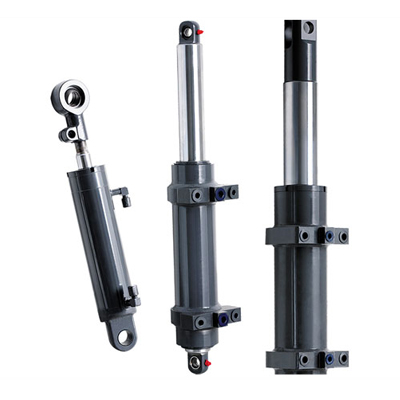
How does a forklift hydraulic cylinder assist in lifting loads?
A forklift hydraulic cylinder plays a critical role in assisting the lifting of loads. Here’s a detailed explanation of how it works:
When a forklift needs to lift a load, the hydraulic cylinder generates the necessary force to raise the load to the desired height. Here’s a step-by-step process of how the hydraulic cylinder assists in lifting loads:
1. Hydraulic Pressure:
When the operator activates the hydraulic controls of the forklift, hydraulic pressure is generated in the hydraulic system. This pressure is typically created by a hydraulic pump, which pressurizes the hydraulic fluid (usually oil) in the system.
2. Hydraulic Fluid Flow:
The pressurized hydraulic fluid is directed to the hydraulic cylinder through control valves and hoses. The fluid enters the cylinder through the inlet port, filling one side of the cylinder.
3. Piston and Piston Rod Extension:
As the pressurized hydraulic fluid enters the cylinder, it acts on one side of the piston. The force exerted by the fluid pushes the piston and the connected piston rod upward.
4. Load Lifting:
As the piston rod extends, it transfers the force to the load-bearing structure of the forklift, such as the mast assembly. The force exerted by the hydraulic cylinder enables the forklift to lift the load off the ground.
5. Load Stability:
The hydraulic cylinder assists in maintaining load stability during the lifting process. The controlled extension of the cylinder allows for smooth and precise lifting, reducing the chances of load tilting or instability.
6. Load Holding:
Once the load reaches the desired height, the hydraulic system can hold the load in place using a valve or a locking mechanism. This ensures that the load remains securely lifted until the operator decides to lower it.
The hydraulic cylinder’s ability to generate a significant amount of force allows forklifts to lift heavy loads efficiently. By controlling the flow of hydraulic fluid and adjusting the cylinder’s extension, the operator can precisely control the lifting speed and height.
In summary, a forklift hydraulic cylinder assists in lifting loads by utilizing hydraulic pressure to extend the piston and piston rod, transferring force to the load-bearing structure of the forklift. This hydraulic force enables the forklift to lift heavy loads, and the controlled extension of the cylinder ensures load stability and precise lifting capabilities.


editor by CX 2024-01-24