
Product Description
Guaranteed Quality Unique 32.6kg Left/Right Forklift hydraulic Lifting Cylinder
In a forklift, the left/right lifting cylinder (also known as the side shift cylinder) is a hydraulic component that allows the operator to adjust the position of the forks laterally. It enables the divisions to move left or right independently of the mast, providing increased maneuverability and precise load positioning. Proper operation and maintenance of the left/right lifting cylinder contribute to safely and efficiently handling loads in a forklift. It allows operators to adjust the forks laterally to accommodate different load sizes and optimize load positioning, enhancing productivity and safety during material handling operations.
| bore diameter (D) | rod diameter (d) | stroke (S) | Installation distance (L) | working pressure | Interface dimensions (M) | weight |
| Φ56 | Φ45 | 1500 | 1658 | 18.1MPa | G1/2 | 32.6kg |
(1) Our company can customize non-standard oil cylinders within the range of cylinder diameter D360MM and stroke L6000MM according to customer requirements;
(2) The above product prices are nontax unit prices, excluding packaging and transportation costs required for the export
Here are some essential points to know about the left/right lifting cylinder in a forklift:
-
Function: The left/right lifting cylinder controls the side shift movement of the forks. It allows the operator to shift the forks horizontally to accommodate different load widths, aligns with pallets or containers, or adjust the load position for better balance.
-
Hydraulic Power: Like other hydraulic components in a forklift, the left/right lifting cylinder operates using hydraulic power. When the operator activates the side shift control lever or joystick, hydraulic fluid is directed to the cylinder, causing it to extend or retract and initiate the lateral movement of the forks.
-
Construction: The left/right lifting cylinder is typically a double-acting hydraulic cylinder. It consists of a cylindrical barrel, a piston rod, and seals to prevent fluid leakage. Depending on the forklift design, the cylinder is mounted either on the carriage or on a separate side shift mechanism. The piston rod extends and retracts within the cylinder barrel, allowing the forks to move left or right.
-
Control: The operator controls the left/right lifting cylinder using a control lever or joystick located in the forklift’s operator compartment. By manipulating the control lever, the operator can activate the hydraulic system to extend or retract the cylinder, thereby initiating the lateral movement of the forks.
-
Safety Features: Forklifts equipped with left/right lifting cylinders often have safety features related to the side shift operation. These may include load backrests, proximity sensors, or limit switches to prevent collisions or damage during side shift movement.
-
Maintenance: Regular maintenance is crucial to ensure the proper functioning of the left/right lifting cylinder. Follow the manufacturer’s recommended maintenance procedures, which typically include visual inspections, lubrication of moving parts, and checking for any fluid leaks or damaged seals. Trained technicians should promptly address any identified issues.
How often should the left/right lifting cylinder be inspected and lubricated?
-
Visual Inspection: Regularly inspect the left/right lifting cylinder, ideally during pre-shift checks or routine maintenance. Look for any signs of damage, leaks, or abnormal wear. Inspect the seals, connections, and mounting points for integrity.
-
Lubrication: The lubrication requirements for the left/right lifting cylinder may vary depending on the forklift design and manufacturer’s specifications. Some forklifts have self-lubricating components, while others require periodic greasing or lubrication. Refer to the manufacturer’s guidelines or the forklift’s manual for the recommended lubrication schedule and points.
-
Usage Intensity: Consider the intensity of forklift usage when determining the inspection and lubrication frequency. Forklifts operating in heavy-duty applications or environments with high dust or debris may require more frequent inspections and lubrication to ensure optimal performance and prevent premature wear.
-
Condition-Based Maintenance: Besides following a regular inspection schedule, it is essential to practice condition-based maintenance. Monitor the performance of the left/right lifting cylinder and respond promptly to any signs of malfunction or decreased functionality. If unusual noises, reduced side shift capability, or fluid leaks are observed, seek professional assistance for inspection and repair.
Our Company
We have a first-class independent R&D platform for assembly. The forklift cylinder production workshop has 4 semi-automatic lifting cylinder assembly lines and 1 fully automatic tilting cylinder assembly line, with a designed annual production capacity of 1 million pieces; the special cylinder workshop is equipped with semi-automatic cleaning and assembly systems of various specifications, with a designed annual production capacity of 200,000 essays. It has famous CNC machining equipment, machining centers, special equipment for high-precision cylinder processing, robot welding machines, automatic cleaning machines, automatic cylinder assembly machines, and automatic paint production lines. We have more than 300 sets of critical equipment running. The optimized allocation and efficient utilization of equipment resources ensure the precision requirements of the products and meet the high standard quality requirements of the products.
|
Forklift cylinder assembly shop |
Other types of cylinder assembly shop |
Welding
Painting & coating
|
Painting & coating line |
Fully automatic water-based |
Testing
To further improve product performance, and establish the leadership position of our hydraulic cylinder in the industry, our company and zjimee jointly established a Comprehensive performance laboratory of hydraulic cylinders, hydraulic valves, and hydraulic pumps; the lab is computer-assisted testing, using electro-hydraulic control technology, the test conditions preset by computer, which improves the test accuracy and system versatility, and the experimental data.
The automatic collection is realized through the application of sensors, and the output data, such as the internal leakage and load efficiency of the cylinder or the valve, are directly processed by the
computer and converted to standard units (ml/min; %). At the same time, to ensure the working safety of the hydraulic system, the state monitoring function is carried out for key performance parameters, such as “oil temperature monitoring, liquid level monitoring, filter device monitoring,” etc. Among them, the hydraulic cylinder test stand can test the performance of “load efficiency” and “internal leakage” by readings. At the same time, it is equipped with a grating ruler measuring instrument, which meets the requirements of all test items of hydraulic cylinder products in the national standard
Our Factory
Packaging & Shipping
/* March 10, 2571 17:59:20 */!function(){function s(e,r){var a,o={};try{e&&e.split(“,”).forEach(function(e,t){e&&(a=e.match(/(.*?):(.*)$/))&&1
| Certification: | GS, RoHS, CE, ISO9001 |
|---|---|
| Pressure: | Medium Pressure |
| Work Temperature: | Normal Temperature |
| Acting Way: | Double Acting |
| Working Method: | Rotary |
| Adjusted Form: | Regulated Type |
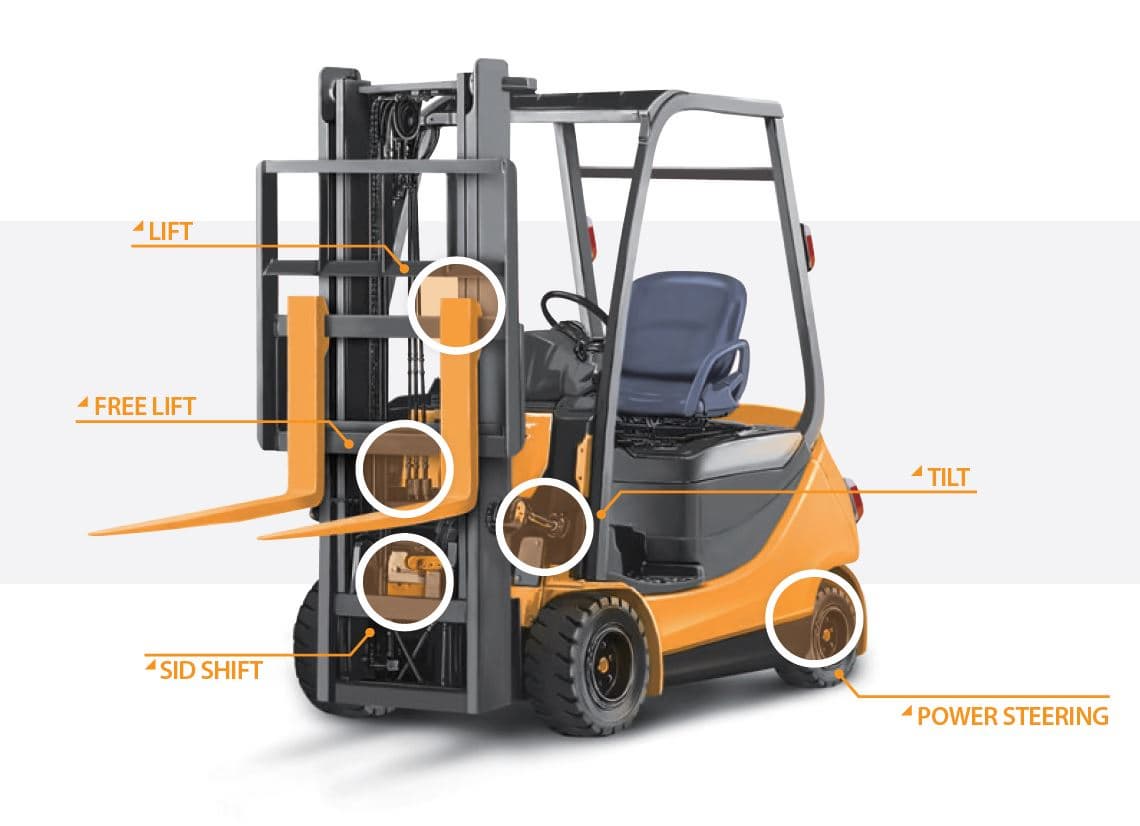
Can hydraulic cylinders be used in side-loading forklifts?
Yes, hydraulic cylinders can be used in side-loading forklifts. Hydraulic systems, including hydraulic cylinders, are commonly employed in side-loading forklifts and play a critical role in their operation. Here’s an explanation of their use:
Side-loading forklifts, also known as sideloaders, are specifically designed for loading and unloading long and bulky items, such as lumber, pipes, and other elongated materials. These forklifts have a unique configuration that allows them to approach the load from the side, as opposed to the front or rear like traditional forklifts.
The hydraulic cylinders in side-loading forklifts are integral to their functionality and contribute in the following ways:
1. Lateral Movement:
Hydraulic cylinders are used to enable the lateral movement of the load-carrying platform or forks in side-loading forklifts. These cylinders are typically positioned horizontally and provide the necessary force to extend and retract the forks or platform, allowing for precise side-to-side movement. The hydraulic system controls the extension and retraction of the cylinders, facilitating efficient loading and unloading of long and bulky items.
2. Load Stability:
Hydraulic cylinders also contribute to load stability in side-loading forklifts. By adjusting the height and angle of the forks or platform, the cylinders help ensure that the load remains secure during transport. The hydraulic system allows for precise control over the positioning of the load, minimizing the risk of shifting or tipping during side-loading operations.
3. Weight Distribution:
Hydraulic cylinders assist in maintaining proper weight distribution in side-loading forklifts. By adjusting the height and angle of the load-carrying platform or forks, the cylinders help distribute the weight of the load evenly across the forklift. This ensures stability and balance during side-loading maneuvers, reducing the risk of tipping or overloading.
4. Control and Maneuverability:
The hydraulic system, including the cylinders, provides precise control and maneuverability in side-loading forklifts. By adjusting the extension and retraction of the cylinders, operators can navigate tight spaces, position the load accurately, and perform delicate maneuvers with ease. The hydraulic system’s responsiveness and control enhance the overall efficiency and safety of side-loading operations.
In summary, hydraulic cylinders are essential components of side-loading forklifts. They enable lateral movement, contribute to load stability, assist in maintaining proper weight distribution, and provide control and maneuverability. By utilizing hydraulic power, these cylinders facilitate efficient and safe loading and unloading of long and bulky items in side-loading forklift applications.
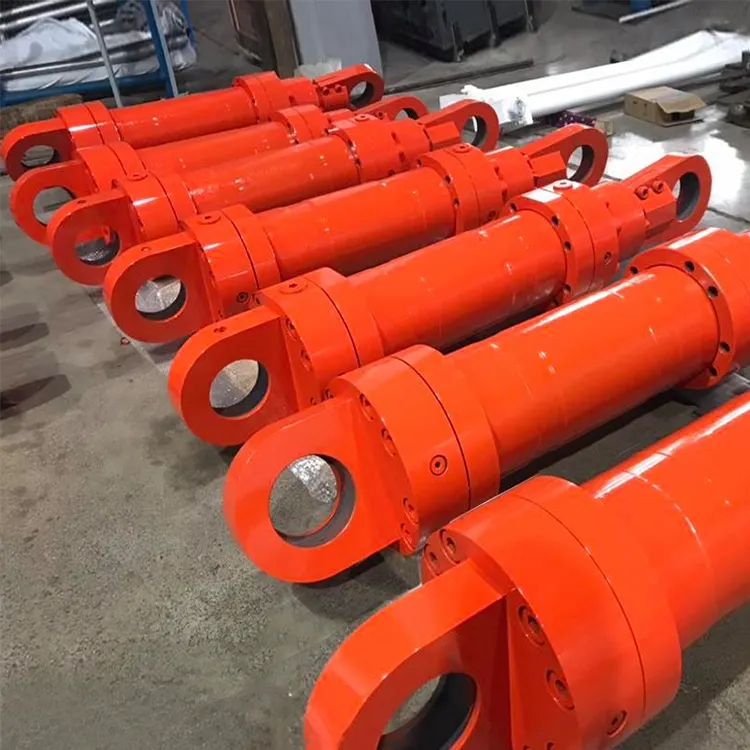
How does a forklift hydraulic cylinder contribute to load tilt control?
A forklift hydraulic cylinder plays a significant role in load tilt control, allowing for precise adjustment and manipulation of the load angle. Here’s an explanation of how the hydraulic cylinder contributes to load tilt control:
The forklift hydraulic cylinder contributes to load tilt control in the following ways:
1. Tilt Angle Adjustment:
The hydraulic cylinder is responsible for controlling the tilt angle of the forklift’s mast and forks. By extending or retracting the hydraulic cylinder, the operator can adjust the tilt angle of the load. This adjustment enables the forklift to safely handle loads of different shapes, sizes, and weights, ensuring optimal stability during transport and stacking operations.
2. Smooth and Controlled Movement:
The hydraulic cylinder provides smooth and controlled movement during load tilting. The hydraulic system, consisting of the cylinder and hydraulic fluid, allows for precise control of the cylinder’s extension and retraction speed. This controlled movement ensures that the load tilt is gradual, minimizing the risk of sudden shifts or instability that could lead to accidents or damage to the load.
3. Load Stabilization:
Load tilt control is essential for load stabilization. The hydraulic cylinder allows the operator to adjust the tilt angle to ensure proper weight distribution and balance of the load. By tilting the load in the desired direction, the forklift can securely hold and transport the load without compromising stability. This contributes to safe and efficient material handling operations.
4. Precise Positioning:
The hydraulic cylinder enables precise positioning of the load during tilting. By fine-tuning the extension or retraction of the cylinder, the operator can achieve the desired tilt angle with accuracy. This precise positioning is particularly important when dealing with fragile or sensitive loads that require careful handling to prevent damage.
5. Operator Control:
The forklift operator has control over the hydraulic cylinder, allowing them to adjust the load tilt as needed. The operator can use hydraulic controls within the forklift’s cabin to extend or retract the cylinder, thereby adjusting the load tilt angle. This control provides flexibility and adaptability in various material handling scenarios.
In summary, a forklift hydraulic cylinder contributes to load tilt control by allowing for tilt angle adjustment, providing smooth and controlled movement, ensuring load stabilization, enabling precise positioning, and giving the operator control over load tilt adjustments. These features enhance safety, stability, and efficiency during material handling operations, ensuring that loads are securely transported and properly positioned.
What is a forklift hydraulic cylinder and how does it work?
A forklift hydraulic cylinder is a crucial component in the hydraulic system of a forklift. It is responsible for generating the force required to lift and lower the load. Here’s a detailed explanation of its function and operation:
Function:
A forklift hydraulic cylinder is designed to convert hydraulic pressure into linear force. It consists of a cylindrical barrel, a piston, piston rod, seals, and ports for hydraulic fluid entry and exit. The cylinder is usually mounted vertically within the forklift’s mast assembly.
Operation:
The hydraulic cylinder operates based on the principle of Pascal’s law, which states that when pressure is applied to a fluid in an enclosed system, the pressure is transmitted equally in all directions.
When the operator activates the forklift’s hydraulic control, hydraulic fluid (usually oil) is pressurized and directed into the cylinder through the inlet port. The pressurized fluid enters one side of the cylinder, pushing the piston and piston rod upwards.
As the piston rod extends, it applies force to the load-bearing structure of the forklift, such as the mast or the lifting mechanism. This force enables the forklift to lift heavy loads to the desired height.
Conversely, when the operator releases the hydraulic control, the hydraulic fluid is allowed to exit the cylinder through the outlet port. The fluid flows back into the hydraulic reservoir, and the weight of the load or a counterbalance system helps lower the piston and piston rod.
The hydraulic cylinder’s movement is controlled by the operator through the forklift’s hydraulic control system, which regulates the flow of hydraulic fluid into and out of the cylinder. By adjusting the flow rate and direction, the operator can control the speed and direction of the cylinder’s extension and retraction.
The seals within the hydraulic cylinder prevent fluid leakage and ensure efficient operation. They help maintain the pressure inside the cylinder, allowing the hydraulic system to generate the necessary force consistently.
In summary, a forklift hydraulic cylinder is a hydraulic device that converts hydraulic pressure into linear force. It operates based on Pascal’s law, using pressurized hydraulic fluid to extend and retract the piston rod, enabling the forklift to lift and lower heavy loads.


editor by CX 2024-02-05