
Product Description
High Quality OEM Steering Hydraulic Cylinder for Forklift Hydraulic Cylinder Made in China
Product Description
| Piston diameter | Max. 200mm, customizable |
| Rod diameter | Max. 160mm, customizable |
| Stroke | Max. 2500mm, customizable |
| Pressure | 16~25Mpa |
| Operating temperature | -40~120 ºC |
| OEM | Accepted |
| MOQ | 1pcs |
We could customized per your drawing!
OTHER HYDRAULIC CYLINDERS
Company Profile
About US:
Tianjian Hydraulic. is a leader in the engineering design and manufacture of high pressure hydraulic cylinders that are widely used in the fields of mining, metallurgy, construction machinery, marine, offshore, water engineering, wind power, hydraulic press, agricultural machinery, and so on.
The Tianjian team has almost 8 years experience delivering innovative and dependable solutions to meet OEM high pressure hydraulic cylinder needs.
If possible, when contact with us, please apply information as below
|
Bore |
Rod |
Stroke |
Work Pressure |
Mounting |
Work environment |
|
|
|
|
|
|
|
Quality Assurance
| Inspection Type | Inspection Standard |
| Raw Material Inspection | Before storage, QC takes the measurement of the raw materials. |
| Process Material Inspection | During the production, QCs conduct a random inspection. Before the hydraulic cylinder parts transferred to the next process, QCs takes inspection. |
| Final Function Testing | All the hydraulic cylinders take hydraulic function test |
FAQ
FAQ:
1, What does your company do?
A: we are a supplier of high quality Hydraulic Cylinders for mining, construction, waste management, forestry, agriculture, etc.
2, Are you a manufacture or a trading company?
A: We are a manufacturer. Warmly welcome to visit us!
3, What certificate do you have?
A: All our factories are ISO certificated. And our main suppliers of materials and parts are with CE, RoHS, and UL certificates.
4, How long is your delivery time?
A: The delivery time depends on different products and quantity. The cylinder usually need about 15-60 days.
5, Can you make parts as customer’s requirement or drawing?
A: Yes, we can OEM for you as your drawings. Our engineer also can give you professional support for technical suggestions.
6, What kind of payment terms do you accept?
A: We prefer T/T through bank. 30% when order is confirmed and 70% before shipment. Can be negotiated.
7, What is your warranty policy?
A: All our products are warranted for 1 full year from date of delivery against defects in materials and workmanship. This warranty does not cover parts that are worn out through the course of normal operation or are damaged through negligence. We serious remind that unclean hydraulic oil will definitely cause damage to your Hydraulic components. And this damage is not included in the warranty range. So we strongly suggest you to use new clean oil or make sure the system oil are clean when using our parts
/* March 10, 2571 17:59:20 */!function(){function s(e,r){var a,o={};try{e&&e.split(“,”).forEach(function(e,t){e&&(a=e.match(/(.*?):(.*)$/))&&1
| After-sales Service: | 10 Years |
|---|---|
| Warranty: | 1 Year |
| Material: | Carbon Steel |
| Surface Treatment: | Baking Paint |
| Customized: | Customized |
| Standard: | Nonstandard |
| Samples: |
US$ 200/Piece
1 Piece(Min.Order) | |
|---|
| Customization: |
Available
|
|
|---|
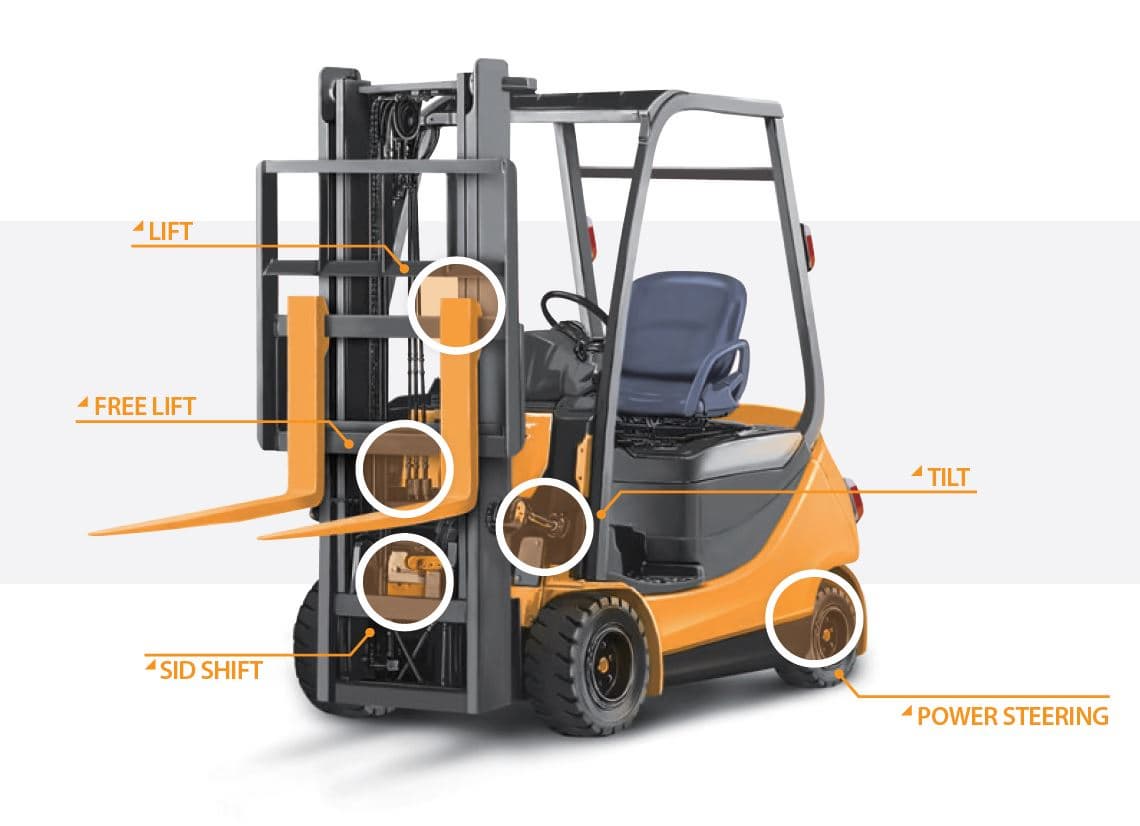
Can hydraulic cylinders be used in side-loading forklifts?
Yes, hydraulic cylinders can be used in side-loading forklifts. Hydraulic systems, including hydraulic cylinders, are commonly employed in side-loading forklifts and play a critical role in their operation. Here’s an explanation of their use:
Side-loading forklifts, also known as sideloaders, are specifically designed for loading and unloading long and bulky items, such as lumber, pipes, and other elongated materials. These forklifts have a unique configuration that allows them to approach the load from the side, as opposed to the front or rear like traditional forklifts.
The hydraulic cylinders in side-loading forklifts are integral to their functionality and contribute in the following ways:
1. Lateral Movement:
Hydraulic cylinders are used to enable the lateral movement of the load-carrying platform or forks in side-loading forklifts. These cylinders are typically positioned horizontally and provide the necessary force to extend and retract the forks or platform, allowing for precise side-to-side movement. The hydraulic system controls the extension and retraction of the cylinders, facilitating efficient loading and unloading of long and bulky items.
2. Load Stability:
Hydraulic cylinders also contribute to load stability in side-loading forklifts. By adjusting the height and angle of the forks or platform, the cylinders help ensure that the load remains secure during transport. The hydraulic system allows for precise control over the positioning of the load, minimizing the risk of shifting or tipping during side-loading operations.
3. Weight Distribution:
Hydraulic cylinders assist in maintaining proper weight distribution in side-loading forklifts. By adjusting the height and angle of the load-carrying platform or forks, the cylinders help distribute the weight of the load evenly across the forklift. This ensures stability and balance during side-loading maneuvers, reducing the risk of tipping or overloading.
4. Control and Maneuverability:
The hydraulic system, including the cylinders, provides precise control and maneuverability in side-loading forklifts. By adjusting the extension and retraction of the cylinders, operators can navigate tight spaces, position the load accurately, and perform delicate maneuvers with ease. The hydraulic system’s responsiveness and control enhance the overall efficiency and safety of side-loading operations.
In summary, hydraulic cylinders are essential components of side-loading forklifts. They enable lateral movement, contribute to load stability, assist in maintaining proper weight distribution, and provide control and maneuverability. By utilizing hydraulic power, these cylinders facilitate efficient and safe loading and unloading of long and bulky items in side-loading forklift applications.
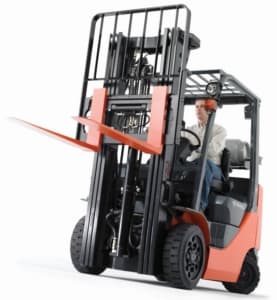
How does a forklift hydraulic cylinder contribute to load rotation?
A forklift hydraulic cylinder plays a significant role in facilitating load rotation. The hydraulic cylinder enables the forklift to manipulate and reposition loads by providing controlled rotational movement. Here’s an explanation of how the hydraulic cylinder contributes to load rotation:
The forklift hydraulic cylinder contributes to load rotation in the following ways:
1. Tilt Function:
Hydraulic cylinders are responsible for the tilt function of the forklift’s mast or carriage. The hydraulic cylinder controls the tilting mechanism, allowing the forks or attachments to tilt forward or backward. By adjusting the tilt angle, the hydraulic cylinder enables the forklift to change the orientation of the load and achieve load rotation.
2. Controlled Movement:
The hydraulic cylinder provides controlled movement during load rotation. It allows the operator to adjust the speed and direction of the tilt function, ensuring smooth and precise rotation of the load. The operator can manipulate the hydraulic controls to achieve the desired rotation angle and maintain stability throughout the process.
3. Load Centering:
Hydraulic cylinders contribute to load rotation by assisting in load centering. The hydraulic system can be equipped with attachments such as rotators or clamps that are actuated by hydraulic cylinders. These attachments help secure the load and ensure it remains centered during rotation, preventing imbalances or accidents.
4. Load Manipulation:
The hydraulic cylinder allows for load manipulation during rotation. By controlling the tilt function, the hydraulic cylinder enables the forklift to precisely position the load, making it easier to place or retrieve items from specific locations. Load rotation facilitated by the hydraulic cylinder enhances the forklift’s versatility and efficiency in various material handling tasks.
5. Operator Control:
Forklift hydraulic cylinders are operated by the forklift operator using hydraulic controls. The operator can adjust the tilt angle and speed of the hydraulic cylinder to achieve the desired load rotation. The hydraulic system provides the necessary responsiveness and control, allowing the operator to safely and accurately manipulate the load.
In summary, a forklift hydraulic cylinder enables load rotation through its tilt function, controlled movement, load centering capabilities, load manipulation, and operator control. The hydraulic cylinder’s ability to provide controlled rotation enhances the forklift’s versatility and efficiency in handling different types of loads and materials.
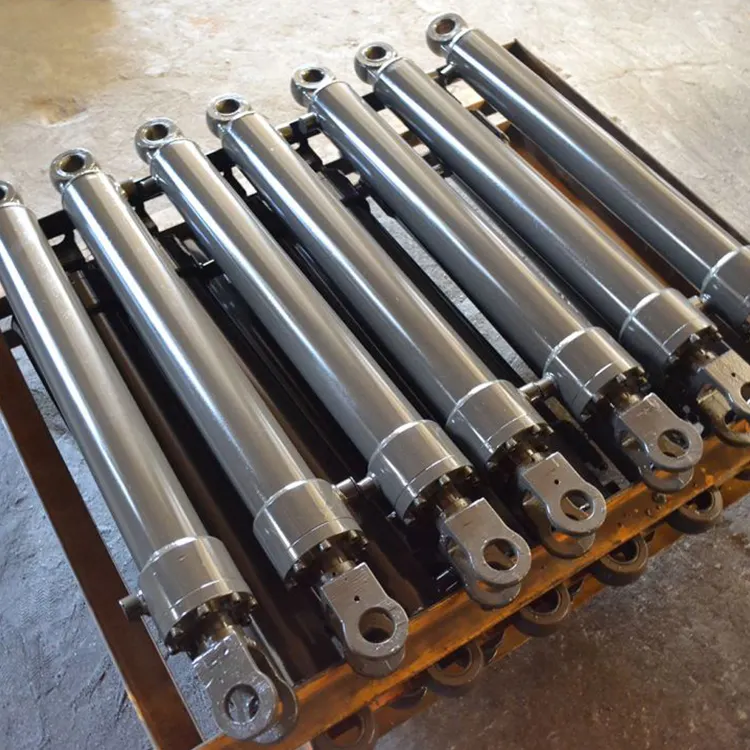
How Does a Forklift Hydraulic Cylinder Contribute to Precise Load Positioning?
A forklift hydraulic cylinder plays a crucial role in achieving precise load positioning during material handling operations. The hydraulic cylinder, along with the hydraulic system of a forklift, enables operators to accurately lift, lower, and position loads with precision. Here’s how a forklift hydraulic cylinder contributes to precise load positioning:
- Controlled Lifting and Lowering:
- Smooth and Gradual Movements:
- Load Sensing and Feedback:
- Fine Adjustment Controls:
- Stability and Balance:
The hydraulic cylinder allows for controlled lifting and lowering of the load. When the operator activates the controls to lift the load, the pressurized hydraulic fluid is directed to the hydraulic cylinder. The hydraulic pressure exerts force on the piston, causing it to extend and lift the load. By regulating the hydraulic pressure and flow, the operator can precisely control the height to which the load is raised. Similarly, during lowering, the hydraulic system enables a controlled descent, allowing for accurate placement of the load.
The hydraulic system, including the cylinder, facilitates smooth and gradual movements of the load. This is achieved through the use of control valves and hydraulic fluid flow regulation. By adjusting the valve settings, the operator can control the speed at which the hydraulic fluid enters or exits the cylinder, resulting in smooth and gradual movements. This level of control allows for precise positioning of the load, especially when working in tight spaces or when dealing with fragile or sensitive materials.
Modern forklifts often incorporate load sensing mechanisms in their hydraulic systems, which further enhance precise load positioning. Load sensing valves continuously monitor the force exerted on the hydraulic cylinder and provide feedback to the hydraulic system. This feedback enables the hydraulic system to adjust the hydraulic pressure and flow rate in real-time, ensuring that the load is positioned accurately and safely. Load sensing technology helps compensate for variations in load weight and provides the operator with greater control and precision.
Forklift hydraulic systems are typically equipped with fine adjustment controls that allow for precise load positioning. These controls, often in the form of joysticks or knobs, enable the operator to make small, incremental adjustments to the lift height or tilt angle of the forks. By manipulating these controls, the operator can fine-tune the position of the load to align it with racks, shelves, or other designated areas. These fine adjustment controls provide the operator with fine-grained control over load positioning, increasing accuracy and efficiency.
The hydraulic cylinder works in conjunction with the overall design and stability features of the forklift to contribute to precise load positioning. Forklifts are designed with a stable base, a low center of gravity, and features such as tilt cylinders and mast positioners. These elements ensure stability and balance during load handling operations, allowing for more accurate positioning of the load. The hydraulic cylinder’s smooth and controlled movements, combined with the stability features of the forklift, enable precise load placement without compromising safety or stability.
In summary, a forklift hydraulic cylinder contributes to precise load positioning through controlled lifting and lowering, smooth and gradual movements, load sensing and feedback mechanisms, fine adjustment controls, and the overall stability and balance of the forklift. These features and capabilities empower operators to handle loads with precision, align them accurately in designated areas, and optimize material handling operations in various industrial settings.


editor by CX 2024-02-06