
Product Description
Company Profile
ZheJiang CHINAMFG Hydraulic Co., Ltd. (Stock Code: 83 0571 ), founded in June 2004, is a domestic medium and high pressure hydraulic cylinder supplier integrating R&D, production, sales and service. Its main products include 3 series of hydraulic cylinders for dump trucks, hydraulic cylinders for mechanical equipment and hydropneumatic springs.
The company’s management team and main technical personnel are stable. We has constantly innovated from the actual needs of customers, has gradually positioned the medium and high-end market, and has provided high-quality products for customers in automobile, coal mine, petroleum, engineering machinery and other industries with high-quality service.
Product Description and Specification
This product is a North American-style front-end telescopic cylinder. It has received high acclaim from customers.
Our product advantage lies in:
1.The North American advanced processing technology is adopted to ensure the stable performance.
2.High quality alloy seamless steel pipe are adopted to keep big lifting capacity and light weight.
3.The application of imperial size makes it easy to replace the seals and other accessories.
4.Superior chrome-plating technology improves the corrosion resistance and hardness of cylinders.
5.The world famous brands of seals such as HALLITE, CHINAMFG and NOK ensure the sealing performance.
To better ensure the safety of your goods, professional, environmentally friendly, convenient and efficient packaging services will be provided.
| Model | The first stage rod diameter | Stroke | Closed length | Open length |
| WTPK 3TG F5*72 | 5″ | 1829mm | 945mm | 2773mm |
| WTPK 3TG F5*84 | 5″ | 2134mm | 1046mm | 3180mm |
| WTPK 3TG F5*107 | 5″ | 2732mm | 1229mm | 3961mm |
| WTPK 3TG F5*126 | 5″ | 3216mm | 1386mm | 4602mm |
| WTPK 3TG F6*86 | 6″ | 3216mm | 1038mm | 3241mm |
| WTPK 3TG F6*104 | 6″ | 2640mm | 1194mm | 3834mm |
| WTPK 3TG F6*107 | 6″ | 2732mm | 1289mm | 3961mm |
| WTPK 3TG F6*111 | 6″ | 2819mm | 1268mm | 4087mm |
| WTPK 3TG F6*120 | 6″ | 3048mm | 1359mm | 4407mm |
| WTPK 3TG F6*126 | 6″ | 3208mm | 1386mm | 4594mm |
| WTPK 3TG F6*140 | 6″ | 3562mm | 1519mm | 5081mm |
| WTPK 4TG F6*135 | 6″ | 3429mm | 1199mm | 4628mm |
| WTPK 4TG F6*156 | 6″ | 3962mm | 1362mm | 5324mm |
| WTPK 3TG F7*110 | 7″ | 2810mm | 1271mm | 4081mm |
| WTPK 3TG F7*120 | 7″ | 3048mm | 1349mm | 4397mm |
| WTPK 3TG F7*124 | 7″ | 3172mm | 1392mm | 4564mm |
| WTPK 3TG F7*129 | 7″ | 3277mm | 1435mm | 4712mm |
| WTPK 3TG F7*140 | 7″ | 3567mm | 1524mm | 5091mm |
| WTPK 3TG F7*150 | 7″ | 3810mm | 1613mm | 5423mm |
| WTPK 4TG F7*120 | 7″ | 3048mm | 1349mm | 4168mm |
| WTPK 4TG F7*135 | 7″ | 3429mm | 1230mm | 4659mm |
| WTPK 4TG F7*140 | 7″ | 3556mm | 1263mm | 4819mm |
| WTPK 4TG F7*156 | 7″ | 3962mm | 1365mm | 5327mm |
| WTPK 4TG F7*161 | 7″ | 4108mm | 1405mm | 5513mm |
| WTPK 4TG F7*167 | 7″ | 4242mm | 1432mm | 5674mm |
| WTPK 4TG F7*180 | 7″ | 4572mm | 1552mm | 6124mm |
| WTPK 4TG F8*148 | 8″ | 3753mm | 1308mm | 5061mm |
| WTPK 4TG F8*156 | 8″ | 3962mm | 1365mm | 5327mm |
| WTPK 4TG F8*161 | 8″ | 4064mm | 1416mm | 5480mm |
| WTPK 4TG F8*170 | 8″ | 4318mm | 1454mm | 5481mm |
| WTPK 4TG F8*180 | 8″ | 4572mm | 1518mm | 6090mm |
| WTPK 5TG F8*170 | 8″ | 4318mm | 1267mm | 5585mm |
| WTPK 5TG F8*190 | 8″ | 4800mm | 1387mm | 6188mm |
| WTPK 5TG F8*220 | 8″ | 5588mm | 1524mm | 7122mm |
| WTPK 5TG F8*235 | 8″ | 5944mm | 1641mm | 7585mm |
| WTPK 5TG F8*250 | 8″ | 6325mm | 1743mm | 8068mm |
| WTPK 5TG F9*265 | 9″ | 6731mm | 1844mm | 8575mm |
| WTPK 5TG F9*280 | 9″ | 7112mm | 1997mm | 9109mm |
| WTPK 5TG F9*300 | 9″ | 7620mm | 2007mm | 9627mm |
| WTPK 5TG F9*320 | 9″ | 8129mm | 2108mm | 9628mm |
| WTPK 5TG F9*340 | 9″ | 8636mm | 2210mm | 10846mm |
Quality Guarantee System
1. Trial Operation Test
2. Start-up Pressure Test
3. Pressure-Tight Test
4. Leak Test
5. Full Stroke Test
6. Buffer Test
7. Testing the Effect of Limit
8. Load Efficiency Test
9. Reliability Test
Every piece of hydraulic cylinder are tested and will send out only after they are pasted the each test. Our company has abundant technical force and perfect testing means. By making wide technical and business cooperation with many related enterprises, universities, colleges and institutes both at home and abroad, and employing senior engineers and software engineers, we have greatly strengthened and improved our designing, processing, and testing abilities.
Machining Equipment
Our company have 700 sets manufacturing equipment, such as cold drawing production line, heat treatment production line, surface treatment production line, testing equipment, various digital-control machining equipment, gantry style linear electroplating production line.
Certificate And Our Customers
Domestic Marketing Locations
The company’s products are widely sold in ZheJiang , ZheJiang , ZheJiang , ZheJiang , ZheJiang , ZheJiang , ZheJiang , ZheJiang , ZheJiang and other more than 20 provinces, municipalities and autonomous regions.
Foreign Marketing Locations
Our products are exported to the United States, Canada, Mexico, Russia, South Africa, Indonesia and other Europe, America, South America, Southeast Asia.
After Service
1.Pre-sale service: Keep communicating with the truck manufacturers , including selection of product model , design of hydraulic system, test of performance and analysis of the accident. Once the problems occur, we will solve them immediately together with truck manufacturers.
2.The sale service: Provide training and technical support for users.
3.After-sale service: Solve the problem firstly, then analyse responsibility ; Replace the system components immediately if any need.
4.24 hours telephone service hotline.
FAQ
Q1:What’s the brand name of your products ?
A:Generally, we use our own brand “WTJX”, OEM is also available as required.
Q2:Hydraulic cylinder internal leakage?
A: There are 3 main reasons causing internal leakage : Overload, polishing is not well controlled, bad seal kits. As is known to all, vehicles in China are often overload,our products all designed to bear the overload power. We have numerical control machine to assure the polish processing. And we use the imported seals to meet customers’ demands.
Q3:Does your piston rod get ruptured easily?
A: Hard chrome plating quenched and tempered 45# steel for piston rod to assure sufficient hardness and toughness.
Q4:What about the quality feedback of your products?
A: Guarantee the quality from the raw material. We have cold drawing production line and nickel-chrome electroplating production line, so we can produce cold-drawing pipe and hard-chrome pipe used for hydraulic cylinder!
/* May 10, 2571 16:49:51 */!function(){function d(e,r){var a,o={};try{e&&e.split(“,”).forEach(function(e,t){e&&(a=e.match(/(.*?):(.*)$/))&&1
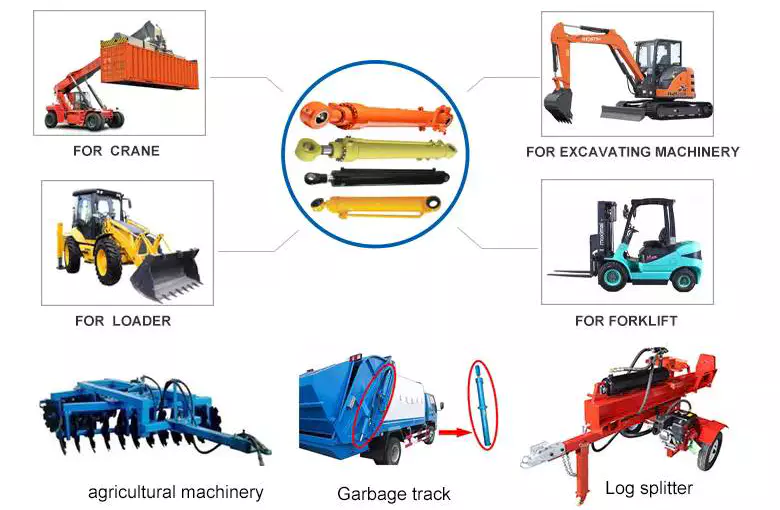
Can hydraulic cylinders be integrated with modern telematics and remote monitoring?
Yes, hydraulic cylinders can indeed be integrated with modern telematics and remote monitoring systems. The integration of hydraulic cylinders with telematics and remote monitoring technology offers numerous benefits, including enhanced operational efficiency, improved maintenance practices, and increased overall productivity. Here’s a detailed explanation of how hydraulic cylinders can be integrated with modern telematics and remote monitoring:
1. Sensor Integration:
– Hydraulic cylinders can be equipped with various sensors to gather real-time data about their performance and operating conditions. Sensors such as pressure transducers, temperature sensors, position sensors, and load sensors can be integrated directly into the cylinder or its associated components. These sensors provide valuable information about parameters such as pressure, temperature, position, and load, enabling remote monitoring and analysis of the cylinder’s behavior.
2. Data Transmission:
– The data collected from the sensors in hydraulic cylinders can be transmitted wirelessly or through wired connections to a central monitoring system. Wireless communication technologies such as Bluetooth, Wi-Fi, or cellular networks can be employed to transmit data in real-time. Alternatively, wired connections such as Ethernet or CAN bus can be utilized for data transmission. The choice of communication method depends on the specific requirements of the application and the available infrastructure.
3. Remote Monitoring Systems:
– Remote monitoring systems receive and process the data transmitted from hydraulic cylinders. These systems can be cloud-based or hosted on local servers, depending on the implementation. Remote monitoring systems collect and analyze the data to provide insights into the cylinder’s performance, health, and usage patterns. Operators and maintenance personnel can access the monitoring system through web-based interfaces or dedicated software applications to view real-time data, receive alerts, and generate reports.
4. Condition Monitoring and Predictive Maintenance:
– Integration with telematics and remote monitoring enables condition monitoring and predictive maintenance of hydraulic cylinders. By analyzing the collected data, patterns and trends can be identified, allowing for the detection of potential issues or anomalies before they escalate into major problems. Predictive maintenance algorithms can be applied to the data to generate maintenance schedules, recommend component replacements, and optimize maintenance activities. This proactive approach helps prevent unexpected downtime, reduces maintenance costs, and maximizes the lifespan of hydraulic cylinders.
5. Performance Optimization:
– The data collected from hydraulic cylinders can also be utilized to optimize their performance. By analyzing parameters such as pressure, temperature, and load, operators can identify opportunities for improving operational efficiency. Insights gained from the remote monitoring system can guide adjustments in system settings, load management, or operational practices to optimize the performance of hydraulic cylinders and the overall hydraulic system. This optimization can result in energy savings, improved productivity, and reduced wear and tear.
6. Integration with Equipment Management Systems:
– Telematics and remote monitoring systems can be integrated with broader equipment management systems. This integration allows hydraulic cylinder data to be correlated with data from other components or related machinery, providing a comprehensive view of the overall system’s performance. This holistic approach enables operators to identify potential interdependencies, optimize system-wide performance, and make informed decisions regarding maintenance, repairs, or upgrades.
7. Enhanced Safety and Fault Diagnosis:
– Telematics and remote monitoring can contribute to enhanced safety and fault diagnosis in hydraulic systems. Real-time data from hydraulic cylinders can be used to detect abnormal conditions, such as excessive pressure or temperature, which may indicate potential safety risks. Fault diagnosis algorithms can analyze the data to identify specific issues or malfunctions, enabling prompt intervention and reducing the risk of catastrophic failures or accidents.
In summary, hydraulic cylinders can be effectively integrated with modern telematics and remote monitoring systems. This integration enables the collection of real-time data, remote monitoring of performance, condition monitoring, predictive maintenance, performance optimization, integration with equipment management systems, and enhanced safety. By harnessing the power of telematics and remote monitoring, hydraulic cylinder users can achieve improved efficiency, reduced downtime, optimized maintenance practices, and enhanced overall productivity in various applications and industries.
Integration of Hydraulic Cylinders with Equipment Requiring Rapid and Dynamic Movements
Hydraulic cylinders can indeed be integrated with equipment that requires rapid and dynamic movements. While hydraulic systems are generally known for their ability to provide high force and precise control, they can also be designed and optimized for applications that demand fast and dynamic motion. Let’s explore how hydraulic cylinders can be integrated with such equipment:
- High-Speed Hydraulic Systems: Hydraulic cylinders can be part of high-speed hydraulic systems designed specifically for rapid and dynamic movements. These systems incorporate features such as high-flow valves, optimized hydraulic circuitry, and responsive control systems. By carefully engineering the system components and hydraulic parameters, it is possible to achieve the desired speed and responsiveness, enabling the equipment to perform rapid movements.
- Valve Control: The control of hydraulic cylinders plays a crucial role in achieving rapid and dynamic movements. Proportional or servo valves can be used to precisely control the flow of hydraulic fluid into and out of the cylinder. These valves offer fast response times and precise flow control, allowing for rapid acceleration and deceleration of the cylinder’s piston. By adjusting the valve settings and optimizing the control algorithms, equipment can be designed to execute dynamic movements with high speed and accuracy.
- Optimized Cylinder Design: The design of hydraulic cylinders can be optimized to facilitate rapid and dynamic movements. Lightweight materials, such as aluminum alloys or composite materials, can be used to reduce the moving mass of the cylinder, enabling faster acceleration and deceleration. Additionally, the cylinder’s internal components, such as the piston and seals, can be designed for low friction to minimize energy losses and enhance responsiveness. These design optimizations contribute to the overall speed and dynamic performance of the equipment.
- Accumulator Integration: Hydraulic accumulators can be integrated into the system to enhance the dynamic capabilities of hydraulic cylinders. Accumulators store pressurized hydraulic fluid, which can be rapidly released to supplement the flow from the pump during high-demand situations. This stored energy can provide an extra boost of power, allowing for faster and more dynamic movements. By strategically sizing and configuring the accumulator, the system can be optimized for the specific rapid and dynamic requirements of the equipment.
- System Feedback and Control: To achieve precise and dynamic movements, hydraulic systems can incorporate feedback sensors and advanced control algorithms. Position sensors, such as linear potentiometers or magnetostrictive sensors, provide real-time position feedback of the hydraulic cylinder. This information can be used in closed-loop control systems to maintain precise positioning and execute rapid movements. Advanced control algorithms can optimize the control signals sent to the valves, ensuring smooth and dynamic motion while minimizing overshooting or oscillations.
In summary, hydraulic cylinders can be integrated with equipment that requires rapid and dynamic movements by utilizing high-speed hydraulic systems, employing responsive valve control, optimizing cylinder design, integrating accumulators, and incorporating feedback sensors and advanced control algorithms. These measures enable hydraulic systems to deliver the speed, responsiveness, and precision necessary for equipment operating in dynamic environments. By leveraging the capabilities of hydraulic cylinders, manufacturers can design and integrate systems that meet the requirements of applications demanding rapid and dynamic movements.
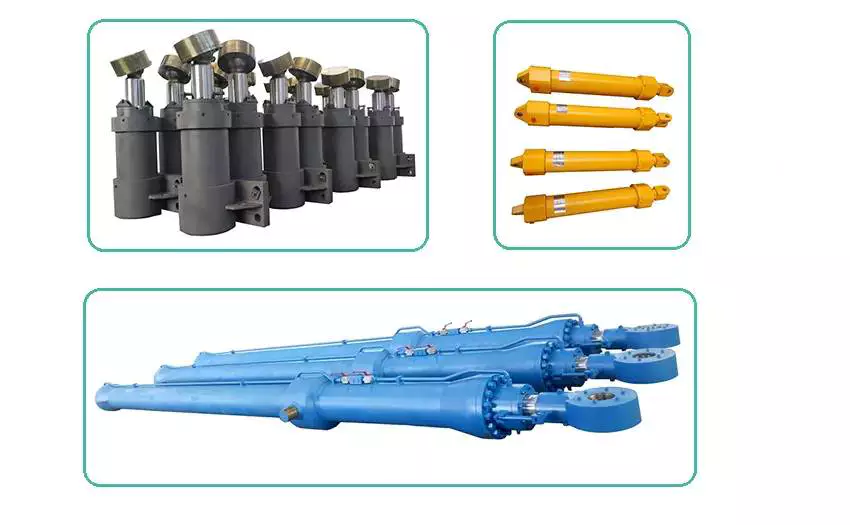
Can hydraulic cylinders be adapted for use in both industrial and mobile equipment?
Yes, hydraulic cylinders can be adapted for use in both industrial and mobile equipment. The versatility and adaptability of hydraulic systems make them suitable for a wide range of applications across various industries. Here’s a detailed explanation:
1. Industrial Equipment:
– Hydraulic cylinders are extensively used in industrial equipment such as manufacturing machinery, construction equipment, material handling systems, and heavy-duty machinery. They provide the necessary force and controlled movement for tasks such as lifting, pushing, pulling, and positioning heavy loads. Industrial hydraulic cylinders are typically designed for robustness, durability, and high load-bearing capacities to withstand the demanding environments and heavy-duty applications encountered in industries.
2. Mobile Equipment:
– Hydraulic cylinders are also widely adopted in mobile equipment, including agricultural machinery, mining equipment, forestry machinery, and transportation vehicles. These cylinders enable various functions such as tilting, lifting, steering, and stabilizing. Mobile hydraulic cylinders are designed to be compact, lightweight, and efficient to meet the specific requirements of mobile applications. They are often integrated into hydraulic systems that power multiple functions in a single machine.
3. Adaptability:
– One of the key advantages of hydraulic cylinders is their adaptability. They can be customized and configured to suit different operating conditions, equipment sizes, load capacities, and speed requirements. Hydraulic cylinder manufacturers offer a wide range of sizes, stroke lengths, mounting options, and rod configurations to accommodate diverse applications. This adaptability allows hydraulic cylinders to be utilized in both industrial and mobile equipment, serving various purposes across different sectors.
4. Mounting Options:
– Hydraulic cylinders can be adapted to different mounting arrangements to suit the specific requirements of industrial and mobile equipment. They can be mounted in various orientations, including vertical, horizontal, or at an angle. Different mounting options, such as flange mounts, trunnion mounts, and clevis mounts, provide flexibility in integrating hydraulic cylinders into different equipment designs.
5. Integration with Hydraulic Systems:
– Hydraulic cylinders are often part of a larger hydraulic system that includes components such as pumps, valves, hoses, and reservoirs. These systems can be tailored to meet the specific needs of both industrial and mobile equipment. The hydraulic system’s design and configuration can be adapted to provide the necessary flow rates, pressures, and control mechanisms required for optimal performance in the intended application.
6. Control and Automation:
– Hydraulic cylinders in both industrial and mobile equipment can be integrated with control systems and automation technologies. This allows for precise and automated control of the cylinder’s movement and function. Proportional control valves, sensors, and electronic controls can be incorporated to achieve accurate positioning, speed control, and synchronization of multiple hydraulic cylinders, enhancing overall equipment performance and productivity.
7. Safety Considerations:
– Hydraulic cylinders for both industrial and mobile equipment are designed with safety in mind. They often feature built-in safety mechanisms such as overload protection, pressure relief valves, and emergency stop systems to prevent accidents and equipment damage. Safety standards and regulations specific to each industry are taken into account during the design and adaptation of hydraulic cylinders for different applications.
Overall, hydraulic cylinders offer the adaptability and performance required for use in both industrial and mobile equipment. Their versatility, customizable features, mounting options, integration capabilities, and safety considerations make them suitable for a wide range of applications across diverse industries. Whether it’s heavy-duty industrial machinery or mobile equipment operating in challenging environments, hydraulic cylinders can be adapted to meet the specific needs and requirements of various equipment types.


editor by Dream 2024-11-07