
Product Description
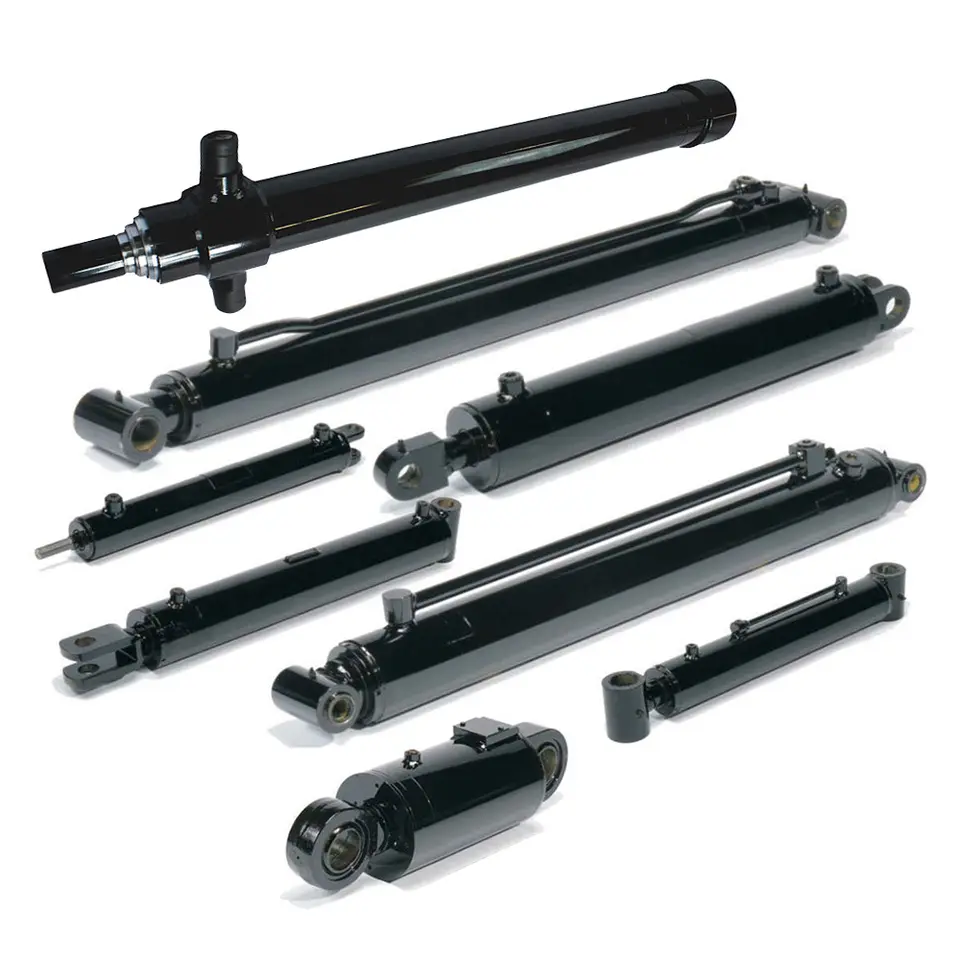
Good quality full set hydraulic cylinder sepecially
| Model Number | Stroke mm |
Cylinder Diameter mm |
Piston Rod Diameter mm |
Thrust mm |
Pulling Force mm |
| JFK01-160/90E-131 | 715 | 160 | 90 | 321.7 | 219.9 |
| JFL01-100/60E-131 | 1200 | 100 | 60 | 125.66 | 87.65 |
| JFK01-80/50E-131 | 700 | 80 | 50 | 101.79 | 70.37 |
| JFK01-80/50E-131 | 640 | 80 | 50 | 101.79 | 70.37 |
| JFK01-80/50/E-131 | 550 | 80 | 50 | 101.79 | 70.37 |
| JFL01-80/50-131 | 500 | 80 | 50 | 80.43 | 54.98 |
| JFL01-80/50E-131 | 440 | 80 | 50 | 80.43 | 42.41 |
| JFL01-63/35E-131 | 200 | 63 | 35 | 50 | 34.5 |
| JFL01-63/35E-131 | 300 | 63 | 35 | 50 | 34.5 |
| JFL01-50/228E-131 | 140 | 50 | 28 | 31.42 | 21.56 |
+30 years experience in hydraulic parts production, CHINAMFG brand hydraulic cylinder are known for their durability, reliability in all conditions and value for money. OEM is available
Certified, excellent quality management system and testing method make the product strong enough to resist all kindf of climate and environment and work stable. For now, we have the certification like CE,SGS,GB,ISO9001,AAAcertified.
Customized hydraulic solution, we can manufacture according to the technical drawing from the client or we can offer our professional suggestion or guidance for our client according to our experience. The package can be done as the request of the clients. For now, we have export more than 20 countries like GUINEEE,USA,Australia etc wining the trust of the customer.
FAQ
Q1: How about the quality?
Our cylinders can work well even in extreme condition and temperature
Q2: What’s your cylinder’s advantages ?
The cylinders are manufactured by advanced equipments and made under strictly quality control processing.
The steel is tempered and all raw materials are good quality from world famous companies.
Competitive price!
Q3: When your company be established ?
Our company be established in 2002, professional manufacturer of hydraulic cylinders more than 20 years.
We had passed IATF 16949:2016 Quality control system, ISO9001, CE.
Q4: How about the delivery time ?
depends the quantity, normally 1 month is no problem.
Q5: How about the cylinder’s quality gurantee ?
One year.
/* October 22, 2571 15:47:17 */(()=>{function d(e,r){var a,o={};try{e&&e.split(“,”).forEach(function(e,t){e&&(a=e.match(/(.*?):(.*)$/))&&1
How does a forklift hydraulic cylinder handle variations in fluid pressure?
A forklift hydraulic cylinder is designed to handle variations in fluid pressure and maintain consistent performance. Here’s an explanation of how it accomplishes this:
The hydraulic cylinder’s ability to handle variations in fluid pressure is primarily attributed to its internal design and the use of various components:
1. Cylinder Construction:
The cylinder barrel, which houses the piston and seals, is designed to withstand high-pressure conditions. It is typically made of durable materials such as high-strength steel to ensure structural integrity and prevent leakage or deformation.
2. Sealing Mechanisms:
The hydraulic cylinder incorporates seals at key points to prevent fluid leakage and maintain pressure. These seals, typically made of rubber or other elastomeric materials, create a tight barrier between the piston and cylinder barrel. They are designed to withstand variations in pressure and provide reliable sealing performance.
3. Pressure Relief Mechanisms:
In situations where there are sudden increases in fluid pressure, hydraulic cylinders may be equipped with pressure relief mechanisms. These mechanisms allow excess pressure to be released, preventing damage to the cylinder or other hydraulic system components. Pressure relief valves or similar devices are commonly used for this purpose.
4. Hydraulic Fluid Properties:
The hydraulic fluid itself plays a role in handling pressure variations. The fluid is carefully selected based on its viscosity, stability, and ability to withstand pressure changes. It is essential to use hydraulic fluids that are specifically formulated for the operating conditions and pressure requirements of the forklift hydraulic system.
5. Control Valves:
The forklift’s hydraulic system includes control valves that regulate the flow and direction of hydraulic fluid. These valves allow the operator to control the pressure and flow rate within the hydraulic cylinder, ensuring safe and efficient operation even during pressure variations.
By incorporating these design elements and components, a forklift hydraulic cylinder can effectively handle variations in fluid pressure. The robust cylinder construction, sealing mechanisms, pressure relief mechanisms, appropriate hydraulic fluid selection, and control valves work together to maintain consistent performance and prevent any adverse effects caused by pressure fluctuations.
In summary, a forklift hydraulic cylinder is specifically designed to handle variations in fluid pressure. Through its construction, sealing mechanisms, pressure relief mechanisms, hydraulic fluid properties, and control valves, the cylinder ensures reliable and consistent performance even under changing pressure conditions.
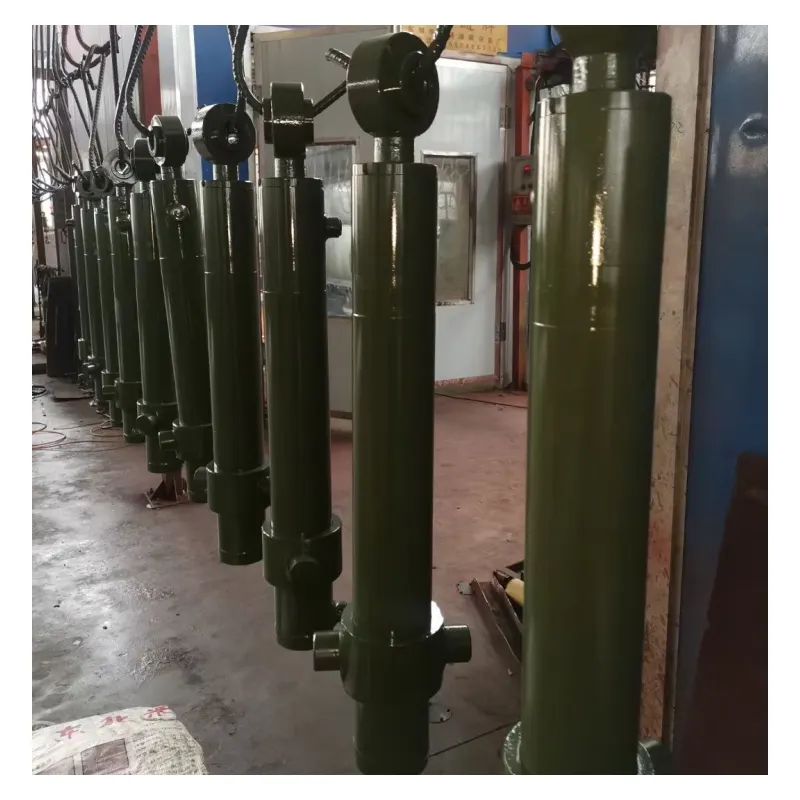
Can hydraulic cylinders be used in container handling forklifts?
Yes, hydraulic cylinders are commonly used in container handling forklifts. Container handling forklifts, also known as container handlers or reach stackers, are specifically designed for lifting and moving shipping containers. Hydraulic cylinders play a crucial role in the operation of these specialized forklifts. Here’s an explanation of how hydraulic cylinders are used in container handling forklifts:
Hydraulic cylinders are utilized in container handling forklifts in the following ways:
1. Mast Lifting:
The main function of hydraulic cylinders in container handling forklifts is to lift and lower the mast. The mast is the vertical assembly that houses the lifting mechanism and forks. Hydraulic cylinders, typically positioned on either side of the mast, provide the power and control for vertical movement. By extending or retracting the cylinders, the forklift can lift and lower containers to the desired height, allowing for stacking or unstacking operations.
2. Reach and Extend:
Container handling forklifts often feature telescopic masts that can reach out and extend. Hydraulic cylinders are responsible for extending and retracting the telescopic sections of the mast. These cylinders enable the forklift to reach containers that are placed further away or to adjust the reach based on container size. The precise control offered by the hydraulic cylinders allows for accurate positioning and safe handling of containers.
3. Container Tilting:
In some container handling forklifts, hydraulic cylinders are used to tilt the container. Tipping containers slightly can help with load stability during stacking or unstacking. Hydraulic cylinders control the tilting operation, allowing the forklift operator to adjust the container’s angle as needed.
4. Side Shift:
Container handlers often feature side shift functionality, which allows the forks or attachment to move horizontally. Hydraulic cylinders are employed to control the side shift movement, enabling precise positioning of the forks or attachment when handling containers. This feature facilitates alignment with container corners and ensures secure engagement.
5. Attachment Control:
Container handling forklifts may have specialized attachments, such as container spreaders or twist locks, for secure container lifting and transport. Hydraulic cylinders play a vital role in controlling the movements of these attachments. They enable precise adjustments and alignment, ensuring proper engagement with the container and safe handling during loading and unloading operations.
In summary, hydraulic cylinders are extensively used in container handling forklifts for mast lifting, reach and extend operations, container tilting, side shift functionality, and attachment control. These cylinders provide the necessary power, control, and precision required to handle containers efficiently and safely in various container terminal and port environments.
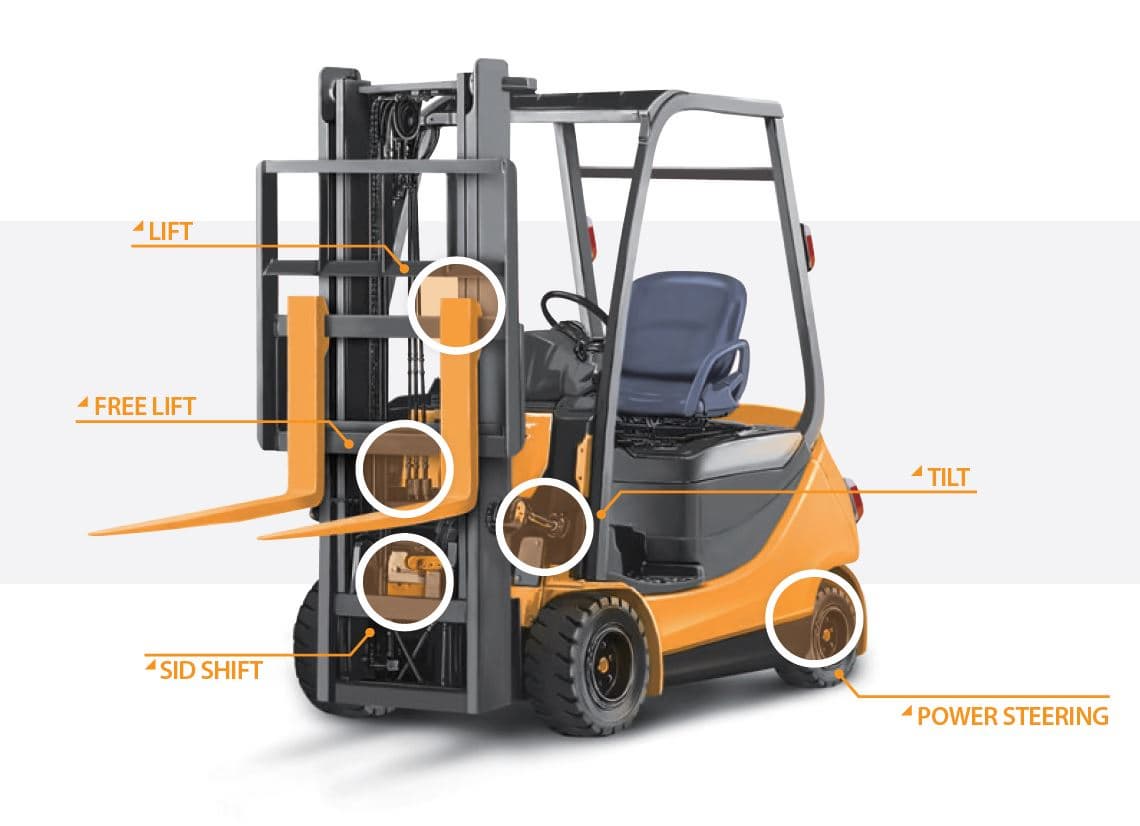
What is a forklift hydraulic cylinder and how does it work?
A forklift hydraulic cylinder is a crucial component in the hydraulic system of a forklift. It is responsible for generating the force required to lift and lower the load. Here’s a detailed explanation of its function and operation:
Function:
A forklift hydraulic cylinder is designed to convert hydraulic pressure into linear force. It consists of a cylindrical barrel, a piston, piston rod, seals, and ports for hydraulic fluid entry and exit. The cylinder is usually mounted vertically within the forklift’s mast assembly.
Operation:
The hydraulic cylinder operates based on the principle of Pascal’s law, which states that when pressure is applied to a fluid in an enclosed system, the pressure is transmitted equally in all directions.
When the operator activates the forklift’s hydraulic control, hydraulic fluid (usually oil) is pressurized and directed into the cylinder through the inlet port. The pressurized fluid enters one side of the cylinder, pushing the piston and piston rod upwards.
As the piston rod extends, it applies force to the load-bearing structure of the forklift, such as the mast or the lifting mechanism. This force enables the forklift to lift heavy loads to the desired height.
Conversely, when the operator releases the hydraulic control, the hydraulic fluid is allowed to exit the cylinder through the outlet port. The fluid flows back into the hydraulic reservoir, and the weight of the load or a counterbalance system helps lower the piston and piston rod.
The hydraulic cylinder’s movement is controlled by the operator through the forklift’s hydraulic control system, which regulates the flow of hydraulic fluid into and out of the cylinder. By adjusting the flow rate and direction, the operator can control the speed and direction of the cylinder’s extension and retraction.
The seals within the hydraulic cylinder prevent fluid leakage and ensure efficient operation. They help maintain the pressure inside the cylinder, allowing the hydraulic system to generate the necessary force consistently.
In summary, a forklift hydraulic cylinder is a hydraulic device that converts hydraulic pressure into linear force. It operates based on Pascal’s law, using pressurized hydraulic fluid to extend and retract the piston rod, enabling the forklift to lift and lower heavy loads.


editor by Dream 2024-11-26