
Product Description
Product Description
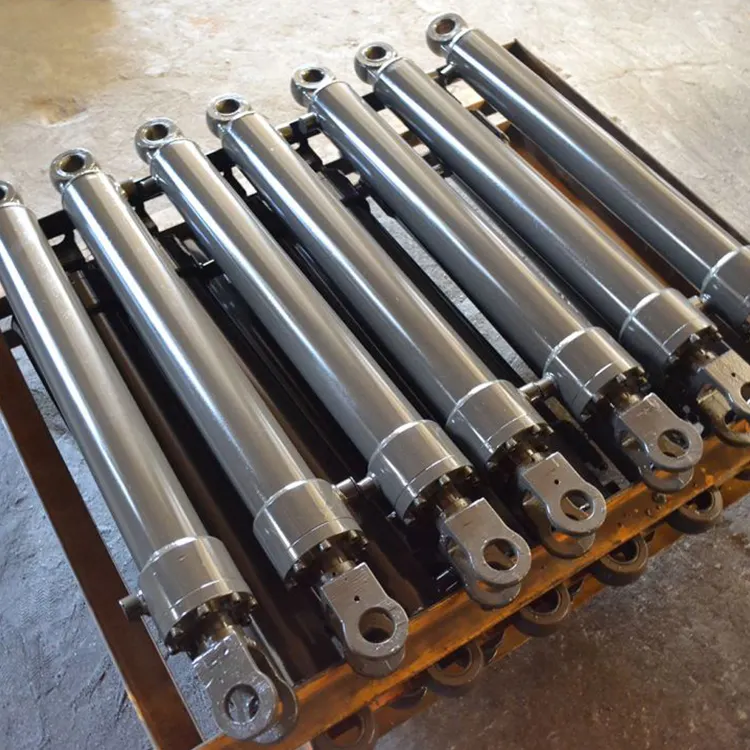
Fee Telescopic Hydraulic Cylinder Used for Lifting Dump Trucks
Type: YBL
Rated Pressure: 16MPa
Cylinder selection guide
Detailed Photos
| Model no | customization |
| Working method | straight trip |
| Structure | piston |
| Acting way | double acting |
| Material | alloy steel |
| Max.pressure | 220 Bar |
| origin | ZheJiang ,china |
| Trademark | Eurik |
OUR FACTORY
Company Profile
• HangZhou Yibolan Machinery & Equipment Co., Ltd located in the beautiful coastal city of HangZhou, China, was established in January 2571. As a foreign trade company dedicated to providing high-quality machinery and equipment, we are committed to becoming the preferred partner for customers worldwide.
Main products include: metal products for the CHINAMFG industry, various special vehicles and spare parts, etc.
• We have our own metal processing factory, covering an area of 10,000 square meters. Our team includes designers, engineers, production staff, welders, machine operators, and quality inspectors, providing full-process custom metal fabrication services to customers worldwide.The products we supply are not only aesthetically pleasing but also highly durable and safe. As a leading supplier of metal products for the CHINAMFG industry, we focus on common species and consider the feeding, breeding, and living habits of livestock. With a research and development focus on items such as gates, panels, feeders, and incubators, we have customized a wide range of high-quality related products.(Cattle Free Stall,Stainless steel piglet plate,Hot Galvanization Hoof Trimming Chute for Sheep,Horse Corral Panels…)
• In addition, the company directly collaborates with major host manufacturers to ensure product quality and professional technical support, guaranteeing peace of mind for customers during subsequent use. Long-term cooperative manufacturers include CHINAMFG (China National Heavy Duty Truck Group), SHACMAN, Shantui, SEM, and CHINAMFG forklifts, among others.
• Since our establishment, we have successfully built long-term relationships with clients in the South Pacific region, Africa, America, and parts of Southeast Asia. To date, the total contract value of independent export business and cooperative projects has reached $10 million.
• Our core values center around putting the client’s needs first, by providing accurate services and support to establish strong business relationships and achieve sustainable development together. We believe that through continuous efforts and innovation, we can create greater value for our clients.
Our Advantages
• Using high-quality, -strength alloy steel pipes, the anti-expansibility is increased by 15% compared to similar cylinders; adopting “double channel” imported seals, high reliability; lengthening guide, bending resistance increased by 15%; static test+dynamic bench test, undergone 50000 load tests without any faults.
• The mechanism layout is optimized, ensuring balanced force distribution among the tripod, pull rod, and hydraulic cylinder, thereby enhancing lifting capacity. At the same time, the closed height is reduced to 465mm, whereas competing mechanisms typically have a closed height of 480-490mm. This design can reduce weight by approximately 20 to 35 Kg.
• Long guide,improve the bending resistance of the cylinder,and better adapt to the side deviation of the carriage.
• The key parts are forged,the overall performance is better,and the reliability of the hydraulic cylinder is improved.
• The base shaft is thickened,which has greater carrying capacity and higher safety.
FAQ
1.Why should be partner with HangZhou YBL ?
• Quality
Deliver consistently superior performance and pursue every possible improvement.
• Agility
Identify emerging trends and act quickly to acquire new opportunities.
• Customer Satisfaction
Anticipate customer needs and exceed their expectations.
2. what services can we provide?
Accepted Delivery Terms: FOB,CFR,CIF,EXW,FAS,CIP,FCA,CPT,DEQ,DDP,DDU,Express Delivery,DAF,DES;
Accepted Payment Currency:USD,EUR,CNY;
Accepted Payment Type: T/T,L/C,D/P D/A,Western Union;
Language Spoken:English,Chinese
3.How about the delivery time ?
depends the quantity, normally 1 month is no problem.
Welcome to Join us!
Please Feel Free to Contact us at Your Convenience.
/* October 22, 2571 15:47:17 */(()=>{function d(e,r){var a,o={};try{e&&e.split(“,”).forEach(function(e,t){e&&(a=e.match(/(.*?):(.*)$/))&&1
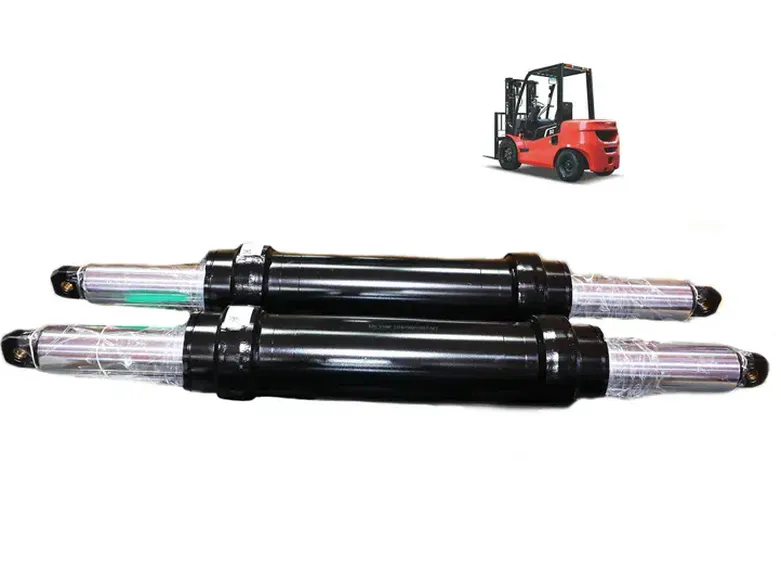
How does a forklift hydraulic cylinder contribute to load stability?
A forklift hydraulic cylinder plays a crucial role in ensuring load stability during lifting and material handling operations. Here’s an explanation of how it contributes to load stability:
Load stability refers to the ability of a forklift to safely lift, carry, and place loads without compromising their balance or causing them to shift unexpectedly. The hydraulic cylinder contributes to load stability in the following ways:
1. Lifting Control:
The hydraulic cylinder allows controlled and smooth lifting of the load. By regulating the flow of hydraulic fluid, the operator can adjust the lifting speed and ensure gradual, steady movement. This controlled lifting action minimizes the risk of load destabilization due to sudden jolts or jerks.
2. Load Balancing:
Hydraulic cylinders can be used in forklifts equipped with load balancing systems. These systems distribute the lifting force evenly across multiple hydraulic cylinders. By sharing the load, each cylinder carries a proportionate weight, reducing the strain on individual components and promoting load stability.
3. Tilting and Fork Positioning:
Hydraulic cylinders are often used to control the tilting of the mast or the positioning of the forks. By adjusting the tilt angle or fork position, the operator can optimize load stability. This feature is particularly important when handling loads with uneven weight distribution or when navigating through narrow spaces.
4. Mast Stability:
The hydraulic cylinder contributes to the stability of the mast assembly. The cylinder’s extension and retraction control the vertical movement of the mast, ensuring proper alignment and support. A stable mast assembly enhances load stability by preventing excessive swaying or wobbling during lifting and material handling operations.
5. Load Lowering:
When lowering the load, the hydraulic cylinder enables controlled and gradual descent. The operator can regulate the flow of hydraulic fluid to prevent sudden drops or impacts that could destabilize the load. This controlled lowering action ensures safe and stable placement of the load.
By incorporating these features and functionalities, a forklift hydraulic cylinder significantly contributes to load stability. It enables controlled lifting, load balancing, precise tilting and fork positioning, mast stability, and controlled load lowering. These capabilities promote safe and efficient material handling operations, reducing the risk of load shifts and maintaining overall load stability.
In summary, a forklift hydraulic cylinder plays a vital role in ensuring load stability. Through its lifting control, load balancing, tilting and fork positioning capabilities, mast stability, and controlled load lowering, the hydraulic cylinder enhances the safe and effective handling of loads, minimizing the risk of instability and accidents.
Can hydraulic cylinders be used in articulated forklifts?
Yes, hydraulic cylinders can be used in articulated forklifts. Articulated forklifts, also known as flexi forklifts or narrow aisle forklifts, are designed with a unique articulating mast that allows for increased maneuverability in tight spaces. Hydraulic cylinders play a vital role in the operation of these forklifts. Here’s an explanation of their use:
Articulated forklifts utilize hydraulic cylinders in several key areas:
1. Mast Articulation:
The primary function of hydraulic cylinders in articulated forklifts is to facilitate the articulation of the mast. The mast is divided into two sections connected by a hydraulic cylinder. This cylinder enables the mast to pivot or bend at a joint, providing the forklift with the ability to articulate and operate in narrow aisles or confined spaces. By extending or retracting the hydraulic cylinder, the operator can articulate the mast to navigate through tight turns and reach pallets from various angles.
2. Lift and Tilt Functions:
Hydraulic cylinders are also used to control the lift and tilt functions of the forks in articulated forklifts. These cylinders allow for smooth and precise lifting and tilting of the forks to pick up, transport, and deposit loads. By adjusting the extension or retraction of the hydraulic cylinders, the operator can control the height and angle of the forks, ensuring efficient and safe load handling.
3. Side Shift:
Some articulated forklifts are equipped with hydraulic cylinders for side shifting capabilities. These cylinders enable the forks to move laterally, allowing for precise positioning of the load. By activating the hydraulic system, the cylinders extend or retract, shifting the forks to the desired position. This feature is particularly useful when aligning the forks with pallets or when working with varying load sizes.
4. Stabilization:
Hydraulic cylinders also contribute to the stability of articulated forklifts. They work in conjunction with the forklift’s frame and counterweight to ensure proper weight distribution and balance. By adjusting the extension or retraction of the hydraulic cylinders, the forklift can maintain stability during lifting and maneuvering operations.
In summary, hydraulic cylinders are integral components of articulated forklifts, enabling mast articulation, controlling lift and tilt functions, providing side shift capabilities, and contributing to overall stability. These cylinders play a crucial role in enhancing the maneuverability and efficiency of articulated forklifts, allowing them to operate effectively in narrow aisles and confined spaces.
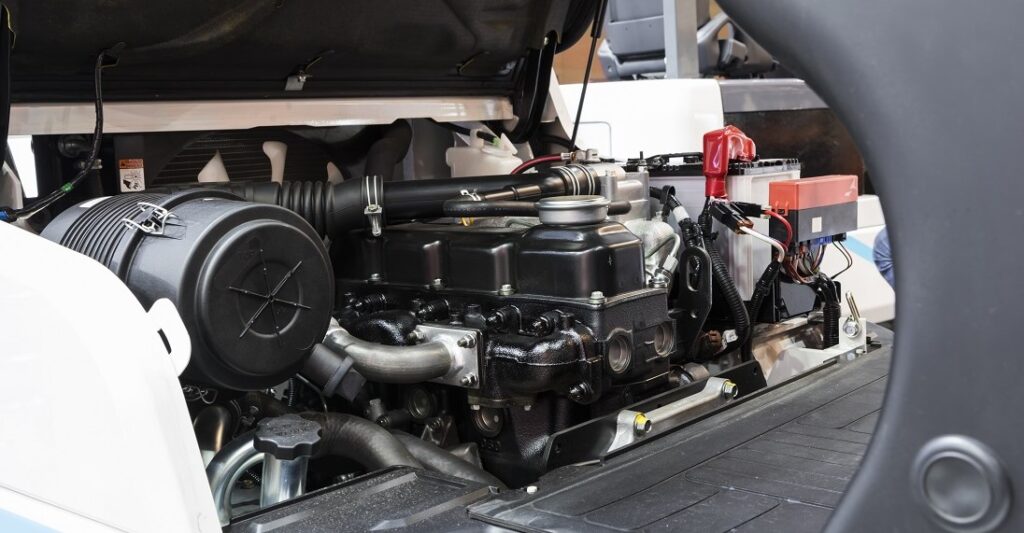
Can You Explain the Role of Hydraulic Fluid in a Forklift Cylinder?
The role of hydraulic fluid in a forklift cylinder is crucial for the proper operation and functionality of the hydraulic system. Hydraulic fluid, also known as hydraulic oil, serves multiple important functions within the forklift cylinder. Here’s an explanation of its role:
- Transmission of Power:
- Lubrication:
- Heat Transfer:
- Sealing and Contamination Prevention:
- Pressure Regulation:
- Contaminant Suspension:
Hydraulic fluid is responsible for transmitting power within the forklift cylinder. The hydraulic system in a forklift uses fluid under pressure to generate force and perform various tasks. When the forklift operator activates the controls, hydraulic fluid is pressurized by the hydraulic pump and directed towards the forklift cylinder. The pressurized fluid then applies force on the piston inside the cylinder, allowing the forklift to lift heavy loads.
Another important role of hydraulic fluid is to provide lubrication within the forklift cylinder. As the piston moves within the cylinder, there is friction between the piston seal and the cylinder wall. Hydraulic fluid acts as a lubricant, reducing friction and preventing excessive wear and tear. The lubricating properties of the hydraulic fluid ensure smooth movement of the piston and other internal components, enhancing the longevity and efficiency of the forklift cylinder.
Hydraulic systems generate heat due to the mechanical and fluid friction occurring during operation. The hydraulic fluid in the forklift cylinder plays a crucial role in heat transfer. It absorbs heat generated within the cylinder and carries it away from the components, helping to maintain the optimal operating temperature. Effective heat transfer prevents overheating and ensures the hydraulic system functions reliably. Some hydraulic fluids are specifically formulated with heat-resistant properties to handle high-temperature applications.
Hydraulic fluid helps maintain a proper seal within the forklift cylinder. The fluid fills the small gaps between the piston and cylinder wall, preventing leakage of pressurized fluid. It also helps to keep out contaminants, such as dirt, dust, and moisture, which can cause damage to the internal components. Hydraulic fluids often contain additives that provide sealing properties and protect against corrosion, maintaining the integrity of the hydraulic system.
Hydraulic fluid plays a role in pressure regulation within the forklift cylinder. The hydraulic pump pressurizes the fluid, and this pressure is transmitted to the cylinder to generate the required force for lifting loads. The properties of the hydraulic fluid, such as viscosity and compressibility, influence the pressure characteristics within the system. Proper selection of hydraulic fluid ensures the desired pressure levels are maintained, allowing the forklift to operate safely and efficiently.
Hydraulic fluid acts as a medium for suspending and carrying away contaminants that may enter the forklift cylinder. It traps particles and debris, preventing them from settling on critical hydraulic components. This helps to maintain the cleanliness of the hydraulic system and reduces the risk of damage or clogging. Regular maintenance, including fluid filtration and replacement, is essential to ensure the hydraulic fluid effectively suspends contaminants and maintains system cleanliness.
In summary, hydraulic fluid plays a vital role in a forklift cylinder. It transmits power, provides lubrication, facilitates heat transfer, helps maintain seals, regulates pressure, and suspends contaminants. By performing these functions, hydraulic fluid ensures the smooth and efficient operation of the forklift hydraulic system, contributing to the lifting and handling of heavy loads with precision and reliability.


editor by Dream 2024-11-28