
Product Description
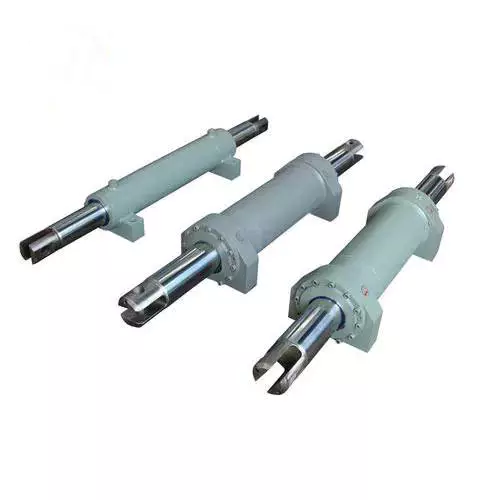
Long Stroke Hydraulic Cylinder for Mine Filter Press
| Item | Specifications |
| Bore diameter | 160mm-800mm,customizable |
| Bod diameter | 110mm-500mm,customizable |
| Stroke | 400mm-6000mm,customizable |
| Working Pressure | 7-45Mpa,customizable |
| Surface treatment of piston rod | HaHard Chrome Plating,Electroplated Milky White Chromium+Hard Chromium,Nickel Plating+Hard Chromium Plating,High-Velocity Oxygen-Fuel CrC NiC,Ceramic Coating,Nitriding,Laser Cladding |
| Work Pressure | Maximum 38MPa,Customizable |
| Material | High tensile cold drawn tube, precision honed for extended seal life |
| Mounting | Earring,Flange,Clevis.Foot,Trunnion,Customizable |
| Seal Type | Parker,NOK, Hallite GAPI or as customer’s requirement |
| Warrenty | 18 months |
| MOQ | 1pcs |
| Production Time | Based on order quantity.normally 30-40 days. |
| Certification | ISO9001,CE, SGS |
| Colour | Red,White,Pink,Yellow,Bule,etc,Customizable |
| Packaging | Metal case,plywood case,carton or as requirement |
| Service | OEM & ODM |
| Price Advantage | Competitive factory price with guaranteed quality |
| Business Type | Manufacturer |
Product Display:
Compact structural design, high-strength material use, and special heat treatment and welding processes ensure that the oil cylinder has extremely high fatigue durability under high pressure and heavy load.
The hydraulic cylinder adopts a multi-channel sealing design to ensure stable operation of the sealing system.
Designed with a wide temperature resistance range (-25 ºC to+120 ºC), and able to provide customized services for higher or lower temperature oil cylinders.
The inner hole of the guide sleeve adopts a high load-bearing guide structure to maximize the lateral load resistance of the oil cylinder.
The surface of the piston rod adopts special surface treatment to ensure excellent wear and corrosion resistance of the piston rod.
Work pressure, size specifications, installation methods, etc. can be customized according to customer needs for design.
Appliactions:Industrial Engineering, Mine Filter Press.
Mounting Method:
Our Factory:
Inspection Process:
| Inspection Type | Inspection Standard |
| Raw Material Inspection | Before storage, QC takes the measurement of the raw materials. |
| Process Material Inspection | During the production, QCs conduct a random inspection. Before the hydraulic cylinder parts transferred to the next process, QCs takes inspection. |
| Final Function Testing | All the hydraulic cylinders take hydraulic function test |
Inspection of Mechanical Properties of Raw Materials
Process Inspection
Final Testing
Packing & Delivery:
About US:
Our Certificate
ZheJiang Tianjian Hydraulic Technology Co.,Ltd is specializing in the production of various types of hydraulic cylinders as well as cylinder barrel, piston cylinder and other cylinder accessories.
As a highly specialized manufacturer of hydraulic cylinders, tianjian provides design optimization solutions and reliable products to many customers at home and abroad. No matter in construction machinery, railway bridge machinery, port ship machinery, metallurgy and mining machinery, oil and light industry machinery, special vehicles and other industries, tianjian can provide various standard and non-standard hydraulic cylinder design optimization schemes and products according to users’ requirements, and provide integrated services for perfection and quality.
If possible, when contact with us, please apply information as below
|
Bore |
Rod |
Stroke |
Work Pressure |
Mounting |
Work environment |
|
|
|
|
|
|
|
Or you can offer us your sketch diagram or photos so that we could understand you exactly meaning, help us avoid mistakes.
And if you have samples, we can manufacture according to your samples after sending to us.
Welcome to our factory if you have any time.
Your satisfaction is our biggest motivation.
Our Main Customers
Now, you can contact with us for any question or inquiry.
FAQ:
1, What does your company do?
A: we are a supplier of high quality hydraulic products including Hydraulic Cylinder, Hydraulic Motor, Hydraulic Power Pack, Hydraulic station and other Hydraulic components.
2, Are you a manufacture or a trading company?
A: We are a manufacturer.
3, What certificate do you have?
A: All our factories are ISO certificated. And our main suppliers of materials and parts are with CE, RoHS, CSA and UL certificates.
4, How long is your delivery time?
A: The delivery time depends on different products and quantity. The cylinder usually need about 45-60 days and the Motor need about 30-50 days.
5, Can you make parts as customer’s requirement or drawing?
A: Yes, we can OEM for you as your drawings. Our engineer also can give you professional support for technical suggestions.
6, What kind of payment terms do you accept?
A: We prefer T/T through bank. 30% when order is confirmed and 70% before shipment. L/C is also acceptable for amount over 20,000USD.
7, What is your warranty policy?
A: All our products are warranted for 1 full year from date of delivery against defects in materials and workmanship. This warranty does not cover parts that are worn out through the course of normal operation or are damaged through negligence. We serious remind that unclean hydraulic oil will definitely cause damage to your Hydraulic components. And this damage is not included in the warranty range. So we strongly suggest you to use new clean oil or make sure the system oil are clean when using our parts
/* October 22, 2571 15:47:17 */(()=>{function d(e,r){var a,o={};try{e&&e.split(“,”).forEach(function(e,t){e&&(a=e.match(/(.*?):(.*)$/))&&1
How do manufacturers ensure the durability and reliability of hydraulic cylinders?
Manufacturers employ various strategies and techniques to ensure the durability and reliability of hydraulic cylinders. These measures are crucial as hydraulic cylinders are often subjected to demanding operating conditions and heavy loads. To ensure their longevity and dependable performance, manufacturers focus on the following aspects:
1. High-Quality Materials:
– Manufacturers use high-quality materials in the construction of hydraulic cylinders. Components such as cylinder barrels, piston rods, seals, and bearings are made from materials that possess excellent strength, corrosion resistance, and wear resistance properties. Common materials used include high-grade steel alloys, chrome-plated rods, and specialized coatings. The selection of appropriate materials ensures that hydraulic cylinders can withstand the stresses, pressures, and environmental conditions they encounter during operation.
2. Robust Design:
– Hydraulic cylinders are designed to withstand high loads and harsh operating conditions. Manufacturers use computer-aided design (CAD) software and finite element analysis (FEA) techniques to optimize the cylinder’s structural integrity and performance. The design includes factors such as proper wall thickness, reinforcement in critical areas, and appropriate sizing of components. Robust design practices ensure that hydraulic cylinders can withstand the forces and stresses they encounter, preventing premature failure and ensuring durability.
3. Quality Manufacturing Processes:
– Manufacturers follow stringent quality control measures during the manufacturing processes of hydraulic cylinders. These processes include precision machining, welding, heat treatment, and surface finishing. Skilled technicians and advanced machinery are employed to ensure dimensional accuracy, proper fitment of components, and overall quality. By adhering to strict manufacturing processes and quality standards, manufacturers can produce hydraulic cylinders with consistent performance and reliability.
4. Sealing Technology:
– The sealing system of hydraulic cylinders is critical for their durability and reliability. Manufacturers utilize advanced sealing technologies such as lip seals, O-rings, and composite seals to prevent fluid leakage and ingress of contaminants. Properly designed and high-quality seals ensure that hydraulic cylinders can maintain their performance over extended periods. Seals are tested for their compatibility with the hydraulic fluid, pressure resistance, and resilience to environmental factors such as temperature and humidity.
5. Performance Testing:
– Manufacturers subject hydraulic cylinders to rigorous performance testing to validate their durability and reliability. These tests simulate real-world operating conditions and evaluate factors such as load capacity, pressure resistance, fatigue life, and leakage. Performance testing helps identify any design flaws or weaknesses in the hydraulic cylinder and allows manufacturers to make necessary improvements. By conducting thorough performance testing, manufacturers can ensure that hydraulic cylinders meet or exceed the required performance standards.
6. Compliance with Industry Standards:
– Manufacturers adhere to industry standards and regulations to ensure the durability and reliability of hydraulic cylinders. These standards, such as ISO 6020/6022 and NFPA T3.6.7, provide guidelines for design, manufacturing, and performance requirements. By following these standards, manufacturers ensure that hydraulic cylinders are designed and built to meet specific quality and safety criteria. Compliance with industry standards helps establish a baseline for durability and reliability and instills confidence in the performance of hydraulic cylinders.
7. Regular Maintenance and Service:
– Manufacturers provide recommendations for regular maintenance and service of hydraulic cylinders. This includes guidelines for lubrication, inspection of components, and replacement of wear parts such as seals and bearings. Following the manufacturer’s maintenance guidelines helps ensure the long-term durability and reliability of hydraulic cylinders. Regular maintenance also allows for the early detection of potential issues, preventing major failures and extending the service life of the hydraulic cylinders.
8. Customer Support and Warranty:
– Manufacturers provide customer support and warranty services to address any issues that arise with hydraulic cylinders. They offer technical assistance, troubleshooting guidance, and replacement of defective components. The warranty ensures that customers receive reliable and durable hydraulic cylinders and provides recourse in case of any manufacturing defects or premature failures. Strong customer support and warranty policies reflect the manufacturer’s commitment to the durability and reliability of their products.
In summary, manufacturers ensure the durability and reliability of hydraulic cylinders through the use of high-quality materials, robust design practices, stringent manufacturing processes, advanced sealing technology, thorough performance testing, compliance with industry standards, regular maintenance guidelines, and customer support with warranty services. By focusing on these aspects, manufacturers can produce hydraulic cylinders that can withstand demanding conditions, provide long service life, and deliver reliable performance in various applications.
Adaptation of Hydraulic Cylinders for Medical Equipment and Aerospace Applications
Hydraulic cylinders have the potential to be adapted for use in medical equipment and aerospace applications, offering unique advantages in these industries. Let’s explore how hydraulic cylinders can be adapted for these specialized fields:
- Medical Equipment: Hydraulic cylinders can be adapted for various medical equipment applications, including hospital beds, patient lifts, surgical tables, and rehabilitation devices. Here’s how hydraulic cylinders are beneficial in medical equipment:
- Positioning and Adjustability: Hydraulic cylinders provide precise and smooth movement, allowing for accurate positioning and adjustments of medical equipment. This is crucial for ensuring patient comfort, proper alignment, and ease of use.
- Load Handling: Hydraulic cylinders offer high force capabilities, enabling the safe handling of heavy loads in medical equipment. They can support the weight of patients, facilitate smooth transitions, and provide stability during procedures.
- Controlled Motion: Hydraulic cylinders provide controlled and stable motion, which is essential for delicate medical procedures. The ability to adjust speed, position, and force allows for precise and controlled movements, minimizing patient discomfort and ensuring accurate treatment.
- Durability and Reliability: Hydraulic cylinders are designed to withstand rigorous use and demanding environments, making them suitable for medical equipment applications. Their durability and reliability contribute to the long-term performance and safety of medical devices.
- Aerospace Applications: Hydraulic cylinders can also be adapted for aerospace applications, where lightweight yet robust systems are essential. Here’s how hydraulic cylinders are advantageous in aerospace:
- Flight Control Systems: Hydraulic cylinders play a critical role in aircraft flight control systems, including ailerons, elevators, rudders, and landing gear. They provide precise and reliable actuation, allowing pilots to control the aircraft’s movements with accuracy and responsiveness.
- Weight Optimization: Hydraulic cylinders can be designed using lightweight materials, such as aluminum alloys or composite materials, to reduce overall weight. This weight optimization is crucial in aerospace applications to enhance fuel efficiency, payload capacity, and aircraft performance.
- Shock and Vibration Resistance: Aerospace environments involve significant shock and vibration forces. Hydraulic cylinders can be engineered to withstand these dynamic loads while maintaining performance and reliability, ensuring consistent operation even under extreme conditions.
- Space Constraints: Hydraulic cylinders can be designed to fit within the space constraints of aircraft or spacecraft. Their compact size and flexible mounting options allow for efficient integration into the limited available space.
In summary, hydraulic cylinders can be adapted for use in medical equipment and aerospace applications, leveraging their precise positioning, load handling capabilities, controlled motion, durability, and reliability. In medical equipment, hydraulic cylinders enable comfortable patient positioning, smooth transitions, and controlled movements during procedures. In aerospace, hydraulic cylinders provide precise actuation, weight optimization, shock and vibration resistance, and space-efficient solutions. By adapting hydraulic cylinders to these specialized fields, manufacturers can meet the unique requirements and enhance the performance of medical equipment and aerospace systems.
How do hydraulic cylinders handle variations in load and pressure during operation?
Hydraulic cylinders are designed to handle variations in load and pressure during operation, making them versatile and efficient in various applications. Hydraulic systems use the principle of transmitting force through incompressible fluid to generate linear motion. Here’s a detailed explanation of how hydraulic cylinders handle variations in load and pressure:
1. Load Handling:
– Hydraulic cylinders are capable of handling different loads by utilizing the principle of Pascal’s law. According to Pascal’s law, when pressure is applied to a fluid in a confined space, the pressure is transmitted equally in all directions. In a hydraulic cylinder, the force applied to the piston results in an equal force output at the rod end of the cylinder. The size of the piston and the pressure exerted determine the force generated by the cylinder. Therefore, hydraulic cylinders can handle a wide range of loads by adjusting the pressure applied to the fluid.
2. Pressure Compensation:
– Hydraulic systems incorporate pressure compensation mechanisms to handle variations in pressure during operation. Pressure compensating valves or regulators are often used to maintain a consistent pressure in the hydraulic system, regardless of load changes. These valves automatically adjust the flow rate or pressure to ensure stable and controlled operation of the hydraulic cylinder. By compensating for pressure variations, hydraulic cylinders can maintain a consistent force output and prevent damage or instability due to excessive pressure.
3. Control Valves:
– Control valves play a crucial role in managing variations in pressure and load during hydraulic cylinder operation. Directional control valves, such as spool valves or poppet valves, control the flow of hydraulic fluid into and out of the cylinder, enabling precise control of the cylinder’s extension and retraction. By adjusting the position of the control valve, the speed and force exerted by the hydraulic cylinder can be regulated to match the load and pressure requirements of the application. Control valves allow for efficient handling of variations in load and pressure by providing fine-tuned control over the hydraulic system.
4. Accumulators:
– Hydraulic accumulators are often used to handle fluctuations in pressure and load. Accumulators store hydraulic fluid under pressure, which can be released or absorbed as needed to compensate for sudden changes in load or pressure. When the load on the hydraulic cylinder decreases, the accumulator releases stored fluid to maintain pressure and prevent pressure spikes. Conversely, when the load on the cylinder increases, the accumulator absorbs excess fluid to maintain system stability. By utilizing accumulators, hydraulic cylinders can effectively handle variations in load and pressure, ensuring smooth and controlled operation.
5. Feedback and Control Systems:
– Advanced hydraulic systems may incorporate feedback and control systems to monitor and adjust the operation of hydraulic cylinders in real-time. Position sensors or pressure sensors provide feedback on the cylinder’s position, force, and pressure, allowing the control system to make continuous adjustments to optimize performance. These systems can automatically adapt to variations in load and pressure, ensuring precise control and efficient operation of the hydraulic cylinder.
6. Design Considerations:
– Proper design considerations, such as selecting the appropriate cylinder size, piston diameter, and rod diameter, are essential for handling variations in load and pressure. The design should account for the maximum anticipated load and pressure conditions to ensure the hydraulic cylinder operates within its specified range. Additionally, the selection of suitable seals, materials, and components that can withstand the anticipated load and pressure variations is crucial for maintaining the reliability and longevity of the hydraulic cylinder.
By utilizing the principles of hydraulic systems, incorporating pressure compensation mechanisms, employing control valves and accumulators, and implementing feedback and control systems, hydraulic cylinders can effectively handle variations in load and pressure during operation. These features and design considerations allow hydraulic cylinders to adapt and perform optimally in a wide range of applications and operating conditions.


editor by Dream 2024-11-28