
Product Description
This hydraulic cylinder is specially designed for milling machine.
This cylinder has the characteristics of compact structure and high reliability. The specific connection dimension and size can be designed in accordance with the requirements of main engine.
| Model | Bore Diameter (mm) |
Rod Diameter (mm) |
Stroke (mm) |
Nominal Pressure (bar) |
| HSG40/25-370*620-WX | 40 | 25 | 370 | 200 |
/* March 10, 2571 17:59:20 */!function(){function s(e,r){var a,o={};try{e&&e.split(“,”).forEach(function(e,t){e&&(a=e.match(/(.*?):(.*)$/))&&1
| Certification: | ISO9001 |
|---|---|
| Pressure: | High Pressure |
| Work Temperature: | Normal Temperature |
| Acting Way: | Double Acting |
| Working Method: | Straight Trip |
| Adjusted Form: | Regulated Type |
| Customization: |
Available
|
|
|---|
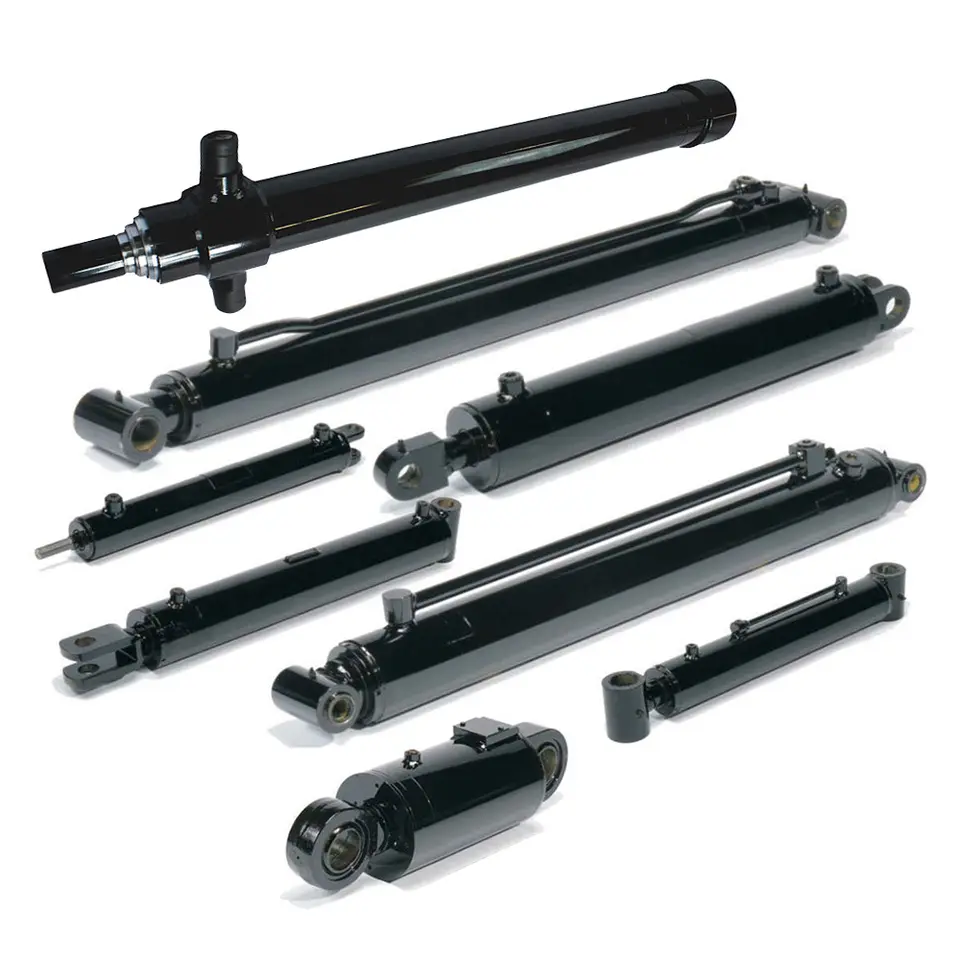
How does a forklift hydraulic cylinder handle variations in fluid pressure?
A forklift hydraulic cylinder is designed to handle variations in fluid pressure and maintain consistent performance. Here’s an explanation of how it accomplishes this:
The hydraulic cylinder’s ability to handle variations in fluid pressure is primarily attributed to its internal design and the use of various components:
1. Cylinder Construction:
The cylinder barrel, which houses the piston and seals, is designed to withstand high-pressure conditions. It is typically made of durable materials such as high-strength steel to ensure structural integrity and prevent leakage or deformation.
2. Sealing Mechanisms:
The hydraulic cylinder incorporates seals at key points to prevent fluid leakage and maintain pressure. These seals, typically made of rubber or other elastomeric materials, create a tight barrier between the piston and cylinder barrel. They are designed to withstand variations in pressure and provide reliable sealing performance.
3. Pressure Relief Mechanisms:
In situations where there are sudden increases in fluid pressure, hydraulic cylinders may be equipped with pressure relief mechanisms. These mechanisms allow excess pressure to be released, preventing damage to the cylinder or other hydraulic system components. Pressure relief valves or similar devices are commonly used for this purpose.
4. Hydraulic Fluid Properties:
The hydraulic fluid itself plays a role in handling pressure variations. The fluid is carefully selected based on its viscosity, stability, and ability to withstand pressure changes. It is essential to use hydraulic fluids that are specifically formulated for the operating conditions and pressure requirements of the forklift hydraulic system.
5. Control Valves:
The forklift’s hydraulic system includes control valves that regulate the flow and direction of hydraulic fluid. These valves allow the operator to control the pressure and flow rate within the hydraulic cylinder, ensuring safe and efficient operation even during pressure variations.
By incorporating these design elements and components, a forklift hydraulic cylinder can effectively handle variations in fluid pressure. The robust cylinder construction, sealing mechanisms, pressure relief mechanisms, appropriate hydraulic fluid selection, and control valves work together to maintain consistent performance and prevent any adverse effects caused by pressure fluctuations.
In summary, a forklift hydraulic cylinder is specifically designed to handle variations in fluid pressure. Through its construction, sealing mechanisms, pressure relief mechanisms, hydraulic fluid properties, and control valves, the cylinder ensures reliable and consistent performance even under changing pressure conditions.
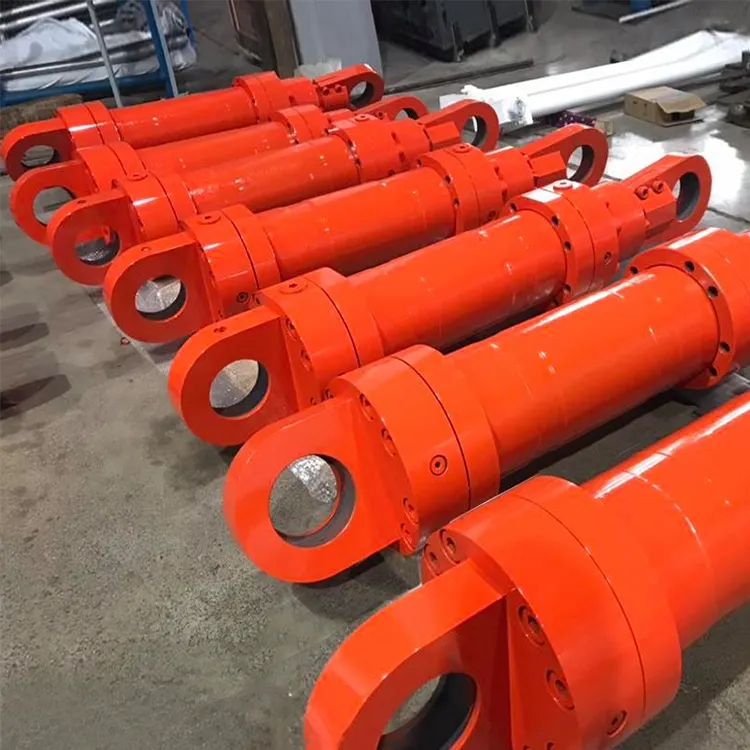
How does a forklift hydraulic cylinder contribute to load tilt control?
A forklift hydraulic cylinder plays a significant role in load tilt control, allowing for precise adjustment and manipulation of the load angle. Here’s an explanation of how the hydraulic cylinder contributes to load tilt control:
The forklift hydraulic cylinder contributes to load tilt control in the following ways:
1. Tilt Angle Adjustment:
The hydraulic cylinder is responsible for controlling the tilt angle of the forklift’s mast and forks. By extending or retracting the hydraulic cylinder, the operator can adjust the tilt angle of the load. This adjustment enables the forklift to safely handle loads of different shapes, sizes, and weights, ensuring optimal stability during transport and stacking operations.
2. Smooth and Controlled Movement:
The hydraulic cylinder provides smooth and controlled movement during load tilting. The hydraulic system, consisting of the cylinder and hydraulic fluid, allows for precise control of the cylinder’s extension and retraction speed. This controlled movement ensures that the load tilt is gradual, minimizing the risk of sudden shifts or instability that could lead to accidents or damage to the load.
3. Load Stabilization:
Load tilt control is essential for load stabilization. The hydraulic cylinder allows the operator to adjust the tilt angle to ensure proper weight distribution and balance of the load. By tilting the load in the desired direction, the forklift can securely hold and transport the load without compromising stability. This contributes to safe and efficient material handling operations.
4. Precise Positioning:
The hydraulic cylinder enables precise positioning of the load during tilting. By fine-tuning the extension or retraction of the cylinder, the operator can achieve the desired tilt angle with accuracy. This precise positioning is particularly important when dealing with fragile or sensitive loads that require careful handling to prevent damage.
5. Operator Control:
The forklift operator has control over the hydraulic cylinder, allowing them to adjust the load tilt as needed. The operator can use hydraulic controls within the forklift’s cabin to extend or retract the cylinder, thereby adjusting the load tilt angle. This control provides flexibility and adaptability in various material handling scenarios.
In summary, a forklift hydraulic cylinder contributes to load tilt control by allowing for tilt angle adjustment, providing smooth and controlled movement, ensuring load stabilization, enabling precise positioning, and giving the operator control over load tilt adjustments. These features enhance safety, stability, and efficiency during material handling operations, ensuring that loads are securely transported and properly positioned.
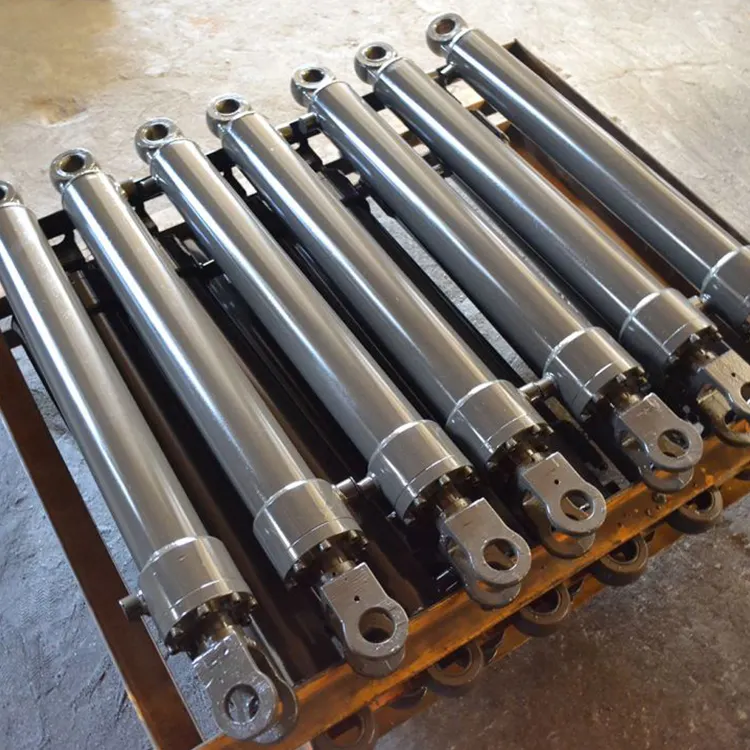
How Does a Forklift Hydraulic Cylinder Contribute to Precise Load Positioning?
A forklift hydraulic cylinder plays a crucial role in achieving precise load positioning during material handling operations. The hydraulic cylinder, along with the hydraulic system of a forklift, enables operators to accurately lift, lower, and position loads with precision. Here’s how a forklift hydraulic cylinder contributes to precise load positioning:
- Controlled Lifting and Lowering:
- Smooth and Gradual Movements:
- Load Sensing and Feedback:
- Fine Adjustment Controls:
- Stability and Balance:
The hydraulic cylinder allows for controlled lifting and lowering of the load. When the operator activates the controls to lift the load, the pressurized hydraulic fluid is directed to the hydraulic cylinder. The hydraulic pressure exerts force on the piston, causing it to extend and lift the load. By regulating the hydraulic pressure and flow, the operator can precisely control the height to which the load is raised. Similarly, during lowering, the hydraulic system enables a controlled descent, allowing for accurate placement of the load.
The hydraulic system, including the cylinder, facilitates smooth and gradual movements of the load. This is achieved through the use of control valves and hydraulic fluid flow regulation. By adjusting the valve settings, the operator can control the speed at which the hydraulic fluid enters or exits the cylinder, resulting in smooth and gradual movements. This level of control allows for precise positioning of the load, especially when working in tight spaces or when dealing with fragile or sensitive materials.
Modern forklifts often incorporate load sensing mechanisms in their hydraulic systems, which further enhance precise load positioning. Load sensing valves continuously monitor the force exerted on the hydraulic cylinder and provide feedback to the hydraulic system. This feedback enables the hydraulic system to adjust the hydraulic pressure and flow rate in real-time, ensuring that the load is positioned accurately and safely. Load sensing technology helps compensate for variations in load weight and provides the operator with greater control and precision.
Forklift hydraulic systems are typically equipped with fine adjustment controls that allow for precise load positioning. These controls, often in the form of joysticks or knobs, enable the operator to make small, incremental adjustments to the lift height or tilt angle of the forks. By manipulating these controls, the operator can fine-tune the position of the load to align it with racks, shelves, or other designated areas. These fine adjustment controls provide the operator with fine-grained control over load positioning, increasing accuracy and efficiency.
The hydraulic cylinder works in conjunction with the overall design and stability features of the forklift to contribute to precise load positioning. Forklifts are designed with a stable base, a low center of gravity, and features such as tilt cylinders and mast positioners. These elements ensure stability and balance during load handling operations, allowing for more accurate positioning of the load. The hydraulic cylinder’s smooth and controlled movements, combined with the stability features of the forklift, enable precise load placement without compromising safety or stability.
In summary, a forklift hydraulic cylinder contributes to precise load positioning through controlled lifting and lowering, smooth and gradual movements, load sensing and feedback mechanisms, fine adjustment controls, and the overall stability and balance of the forklift. These features and capabilities empower operators to handle loads with precision, align them accurately in designated areas, and optimize material handling operations in various industrial settings.


editor by CX 2024-02-11