
Product Description
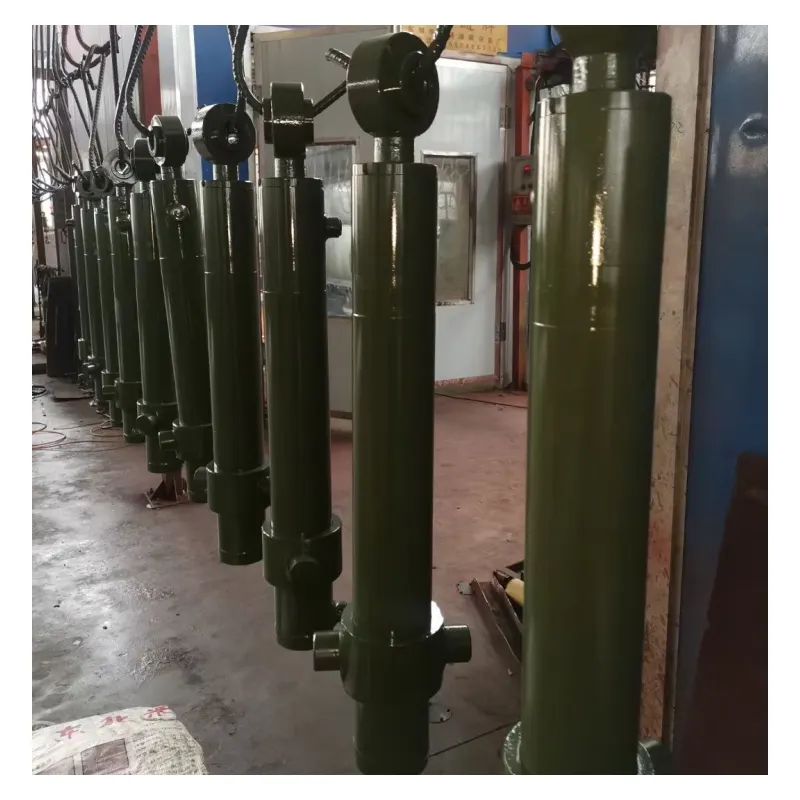
Products Description
|
Product Name |
HSG Series Hydraulic Cylinder |
|||
|
Work Press |
7/14/16/21/31.5MPa 37.5/63MPa Can be Customized |
|||
|
Material |
Aluminum,Cast Iron,45mnb Steel,Stainless Steel |
|||
|
Bore Size |
40mm–320mm,Customizable |
|||
|
Shaft Diameter |
20mm–220mm,Customizable |
|||
|
Stroke Length |
30mm–14100mm,Customizable |
|||
|
Rod Surface Hardness |
HRC48-54 |
|||
|
Paint Color |
Black,Yellow,Blue,Brown,Customizable |
|||
|
Mounting |
Earring,Flange,Clevis.Foot,Trunnion,Customizable |
|||
|
Warrenty |
1 Year |
|||
|
MOQ |
1 Piece |
|||
|
Delivery Time |
7-15 Days,Also depands on specific demands |
|||
|
Certification |
ISO9001,CE |
|||
Company Profile
QIANGLIN HYDRAULIC MACHINERY CO., LTD
| QiangLin is a professional hydraulic equipment manufacturer, mainly engaged in hydraulic system design, manufacture, installation, transformation, sales, and technical services. Our manufacturing facilities are certified to the ISO 9001 standard. We are an approved supplier to many equipment manufacturers in China. We are also partners with many customers from America, Canada, Australia, Germany, England, and other European Countries. Product quality, shorter delivery time, and customer satisfaction are our long-term commitments to our CHINAMFG customers. Hope to be your partner. |
FAQ:
Q1: Are you a trading company or a manufacturer?
A: We have our own factory.
Q2: Are you able to make Non-standard or customized products?
A: Yes, we can.
Q3: How long is your delivery time?
A: Normally, the delivery time is 7 days if we have stock, 15-30 working days if we don’t. but it
also depends on the product
requirements and quantity.
Q4: Do you provide samples? are the samples free or not?
A: Yes, we can provide samples, but they are not free of charge.
Q5: What are your payment terms?
A: 30% deposit T/T or Irrevocable L/C at sight, If you have any questions, please feel free to
contact us.
Q6: What are your After-sales services?
A: Before shipment, Each individual product will be strictly inspected on our factory QC Process
System. In addition, We have a
Customer Service team to respond to customers’ questions within 12 hours. Being helpful in
solving customers’ problems is always our goal. /* March 10, 2571 17:59:20 */!function(){function s(e,r){var a,o={};try{e&&e.split(“,”).forEach(function(e,t){e&&(a=e.match(/(.*?):(.*)$/))&&1
| Certification: | CE, ISO9001 |
|---|---|
| Pressure: | High Pressure |
| Work Temperature: | Normal Temperature |
| Customization: |
Available
|
|
|---|
.shipping-cost-tm .tm-status-off{background: none;padding:0;color: #1470cc}
|
Shipping Cost:
Estimated freight per unit. |
about shipping cost and estimated delivery time. |
|---|
| Payment Method: |
|
|---|---|
|
Initial Payment Full Payment |
| Currency: | US$ |
|---|
| Return&refunds: | You can apply for a refund up to 30 days after receipt of the products. |
|---|
Can hydraulic cylinders be used in rough terrain forklifts?
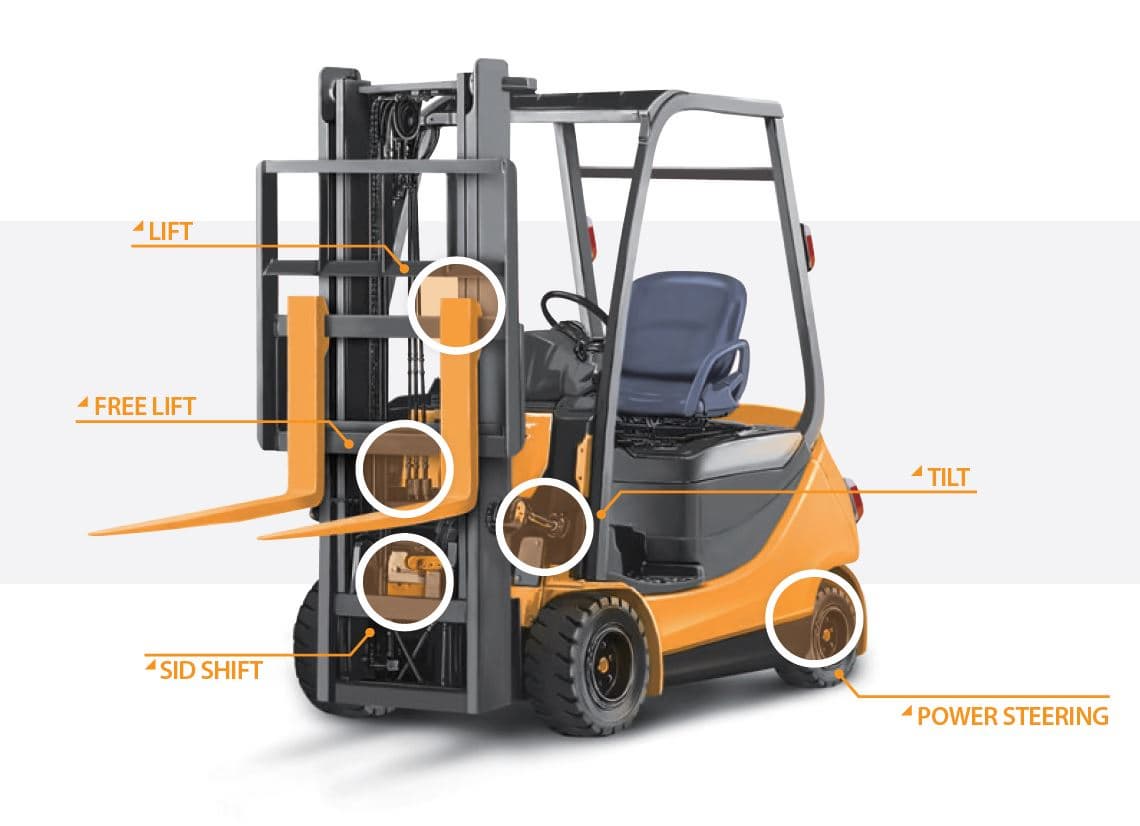
Yes, hydraulic cylinders can be used in rough terrain forklifts. Hydraulic systems, including hydraulic cylinders, are an essential component of rough terrain forklifts and play a crucial role in their operation. Here’s an explanation of their use:
Rough terrain forklifts are specifically designed to operate in challenging outdoor environments, such as construction sites, lumber yards, and agricultural settings. These forklifts are equipped with features that allow them to navigate uneven terrain, slopes, and other rough surfaces. Hydraulic cylinders are integral to their performance in the following ways:
1. Lifting Functionality:
The hydraulic cylinder in a rough terrain forklift is responsible for lifting and lowering the load-carrying forks. It provides the necessary force to elevate heavy loads to the desired height. The hydraulic system allows precise control over the lifting speed and positioning, enabling efficient material handling even on rough and uneven surfaces.
2. Suspension System:
Rough terrain forklifts are equipped with a suspension system that helps absorb shocks and vibrations during operation. Hydraulic cylinders are often used as part of the suspension system to provide damping and improve ride comfort. These cylinders help cushion the impact of uneven terrain, reducing the transfer of vibrations to the forklift and the load being carried.
3. Stability and Balance:
Hydraulic cylinders contribute to the stability and balance of rough terrain forklifts. They are used to control the extension and retraction of the mast assembly, which supports the forks and the load. By adjusting the mast height and angle, the cylinders help maintain stability and balance, especially when operating on slopes or uneven ground.
4. Steering and Maneuverability:
Some rough terrain forklifts utilize hydraulic cylinders in their steering mechanisms. These cylinders assist in turning and maneuvering the forklift, allowing it to navigate through tight spaces and negotiate obstacles on rough terrain. The hydraulic system provides the necessary power and control for smooth and precise steering operations.
Overall, hydraulic cylinders are essential components of rough terrain forklifts. They enable the lifting functionality, contribute to the suspension system for improved ride comfort, help maintain stability and balance, and assist in steering and maneuverability. By utilizing hydraulic power, these forklifts can effectively handle the challenges of rough outdoor environments and ensure efficient material handling operations.
In summary, hydraulic cylinders are indeed used in rough terrain forklifts. Their presence in these forklifts enables reliable lifting, enhances stability and balance, improves ride comfort through suspension systems, and assists in steering and maneuverability on uneven surfaces. The use of hydraulic technology is instrumental in achieving optimal performance and productivity in rough terrain applications.
How does a forklift hydraulic cylinder handle variations in hydraulic hoses?
A forklift hydraulic cylinder is designed to handle variations in hydraulic hoses, ensuring efficient and reliable operation. Here’s an explanation of how the hydraulic cylinder handles such variations:
The forklift hydraulic cylinder handles variations in hydraulic hoses in the following ways:
1. Flexibility:
The hydraulic cylinder is designed to be flexible in accommodating different lengths and sizes of hydraulic hoses. It can adapt to variations in hose lengths without compromising its functionality. This flexibility allows the hydraulic cylinder to connect seamlessly to the hydraulic system, regardless of the specific hose configuration.
2. Swivel Joints:
In some forklift hydraulic systems, swivel joints are used to connect the hydraulic hoses to the cylinder. Swivel joints allow for rotational movement, ensuring that the hoses can be properly aligned and connected to the cylinder. This feature compensates for any misalignment or variations in the hose routing, allowing for smooth operation of the hydraulic cylinder.
3. Hose Couplings and Fittings:
The hydraulic cylinder is equipped with hose couplings and fittings that provide secure and leak-free connections to the hydraulic hoses. These couplings and fittings are designed to accommodate variations in hose sizes, ensuring a tight and reliable connection. The hydraulic cylinder can handle different types of fittings, such as threaded, quick-connect, or flanged, depending on the specific hydraulic hose configuration.
4. Pressure and Flow Regulation:
The hydraulic cylinder is designed to handle variations in hydraulic pressure and flow. It can operate effectively within a specified pressure range, allowing for adjustments to accommodate different hydraulic systems or applications. The hydraulic cylinder’s internal design and components are engineered to withstand the pressure and flow variations commonly encountered in hydraulic systems.
5. Safety Measures:
Forklift hydraulic cylinders incorporate safety measures to handle variations in hydraulic hoses. These measures may include pressure relief valves, check valves, or flow control valves. These components help regulate and control the hydraulic pressure and flow, ensuring safe and efficient operation of the hydraulic cylinder, even in the presence of variations or fluctuations in the hydraulic hoses.
In summary, a forklift hydraulic cylinder is designed to handle variations in hydraulic hoses through flexibility, swivel joints, hose couplings and fittings, pressure and flow regulation, and safety measures. These features ensure that the hydraulic cylinder can connect to different hose configurations, adapt to variations in hose lengths, and operate reliably within a range of hydraulic pressure and flow conditions.
What are the components of a forklift hydraulic cylinder?
A forklift hydraulic cylinder consists of several components that work together to generate the necessary force for lifting loads. Here’s a breakdown of the key components:
1. Cylinder Barrel:
The cylinder barrel is a cylindrical tube that provides the housing for the other components of the hydraulic cylinder. It is typically made of high-strength steel or other durable materials to withstand the hydraulic forces.
2. Piston:
The piston is a cylindrical component that fits inside the cylinder barrel. It divides the cylinder into two chambers and is responsible for transferring the hydraulic force. The piston is sealed against the cylinder barrel to prevent fluid leakage between the chambers.
3. Piston Rod:
The piston rod extends from the piston and protrudes out of the cylinder barrel. It is connected to the load-bearing structure of the forklift, such as the mast assembly. The piston rod transmits the force generated by the hydraulic fluid to lift and lower the loads.
4. Seals:
Seals are essential components that prevent hydraulic fluid leakage and maintain the pressure within the cylinder. They are typically made of rubber or other elastomeric materials and are positioned at various points of the cylinder, such as around the piston and piston rod.
5. Inlet and Outlet Ports:
The hydraulic cylinder has inlet and outlet ports that allow the hydraulic fluid to enter and exit the cylinder. The inlet port is connected to the hydraulic system’s control valves and hoses, delivering pressurized fluid into the cylinder. The outlet port allows the fluid to flow out of the cylinder when the load is being lowered.
6. Mounting and Connection Components:
To integrate the hydraulic cylinder into the forklift’s hydraulic system, various mounting and connection components are used. These can include brackets, pins, clevises, and other fittings that secure and connect the cylinder to the forklift’s structure.
Each of these components plays a crucial role in the operation of the forklift hydraulic cylinder. The cylinder barrel provides the housing, the piston and piston rod generate the force, seals prevent fluid leakage, and the inlet and outlet ports facilitate the flow of hydraulic fluid. The mounting and connection components ensure proper integration into the forklift.
In summary, the components of a forklift hydraulic cylinder include the cylinder barrel, piston, piston rod, seals, inlet and outlet ports, and various mounting and connection components. Together, these components enable the hydraulic cylinder to generate the force necessary for lifting and lowering loads in a forklift.


editor by CX 2024-02-04