
Product Description
Detailed Photos
Product Parameters
Product Details
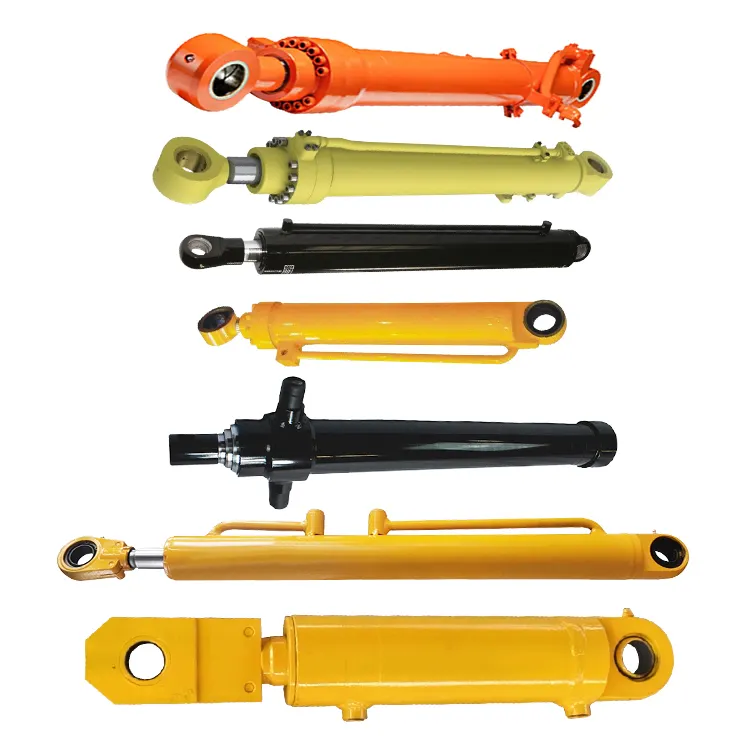
The CHINAMFG hydraulic cylinder adopts excellent sealing technology and new material applications, which can withstand the worstworking conditions and can adapt to the temperature range of
-40~110°C. It operates continuously and stably in high and low temperature environments, ensuring the safety of drivers and vehicles.
1. Adopts high-quality 27SiMn regulated steel pipe, with high tensile strength, high yield and strong bearing capacity.
2. Patented technology design and advanced production manufacturing are adopted to ensure the stability of product quality.
3. Imported oil seal is adopted, with good sealing performance.
4. Special design, light weight, fast lifting and lowering speed.
5. Surface is chromed to increase the surface hardness and prolong the service life.
Application
We have more hydraulic cylinders, you can initiate inquiries and contact us
Company Introduction
HangZhou CHINAMFG Machinery Co., Ltd. was established in 2002 and is located at the north end of the East Outer Ring Road in HangZhou City (1 kilometer south of thehighway toll station), with convenient transportation. The company is a profes-sional equipment production enterprise dedicated to the design, research and development, and manufacturing of hydraulic machinery products. Leading vari-ous specialized vehicle hydraulic cylinder assemblies and hydraulic system prod-ucts.
The company covers an area of over 100 acres. We have a total of 150 sets of deep hole boring equipment, cold drawing production lines, testing equipment, various CNC machining machines, cylindrical grinding machines, centerless grind-ing machines, welding production lines, etc. The company passed the IS09001d quality system certification in 2003; In 2013, it passed ISO/TSI6949 international quality system certification and was awarded the title of China’s Quality Integrity AAA Class Brand Enterprise.
Other products
Packaging & Shipping
After sending, we will track the products for you once every 2 days, until you get the products. When you got the goods, test them, and give me a feedback. If you have any questions about the problem, contact with us, we will offer the solve way for you.
FAQ
Q1: How is the quality?
We adopt patented technology structure design and advanced production process, and have passed the IATF16949:2016 quality control system and ISO9001 to ensure stable product quality.
Q2: What are the advantages of your oil cylinder?
The oil cylinder is manufactured using advanced equipment and processed through strict quality control. The steel has undergone tempering treatment, and all raw mate-
rials are from world-renowned companies with superior quality.
Competitive prices!
Q3: When was your company established?
Our company was established in 2002, specializing in the production of hydraulic cyl-
inders for over 20 years.
Q4: What is the delivery time?
About 30 days.
Q5: What is the quality assurance of hydraulic cylinders?
One year.
To get price list of promotion hydro cylinder, please contact us
/* May 10, 2571 16:49:51 */!function(){function d(e,r){var a,o={};try{e&&e.split(“,”).forEach(function(e,t){e&&(a=e.match(/(.*?):(.*)$/))&&1
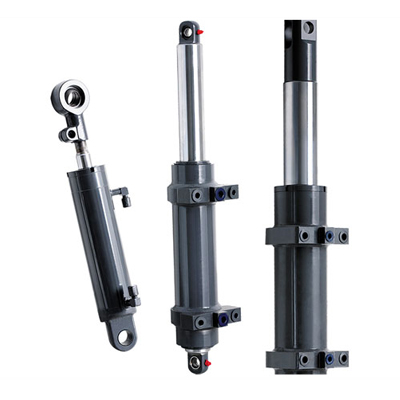
Can hydraulic cylinders be used in narrow-aisle forklifts?
Yes, hydraulic cylinders can be used in narrow-aisle forklifts. In fact, hydraulic cylinders play a crucial role in the lifting and operational capabilities of these specialized forklifts designed for maneuvering in narrow spaces. Here’s an explanation of their use:
Narrow-aisle forklifts, also known as narrow-aisle reach trucks or very narrow aisle (VNA) forklifts, are designed to operate in tight spaces with narrow aisles and high racking systems. These forklifts rely on hydraulic systems, including hydraulic cylinders, to perform their lifting and positioning functions.
The hydraulic cylinder in a narrow-aisle forklift is responsible for vertically extending and retracting the mast assembly, which carries the load-carrying forks. The mast assembly typically consists of multiple stages that can reach significant heights to access the high racking systems.
When the operator activates the lifting control, hydraulic fluid is pressurized and directed to the hydraulic cylinder. The cylinder extends vertically, raising the mast and forks to the desired height. The hydraulic system provides precise control over the lifting speed and positioning, allowing for efficient and accurate load handling in narrow spaces.
In addition to the lifting function, hydraulic cylinders can also contribute to the tilting and side-shifting capabilities of narrow-aisle forklifts. Some models are equipped with hydraulic cylinders that enable the tilting of the mast or the forks, allowing for better load positioning and stability. Hydraulic cylinders can also be employed to provide side-shifting functionality, enabling the lateral movement of the forks for improved load placement.
The use of hydraulic cylinders in narrow-aisle forklifts ensures that these specialized machines have the necessary power and control to operate in tight spaces. The hydraulic system provides the force required for lifting and positioning loads, while also offering the flexibility to tilt or shift the forks as needed.
In summary, hydraulic cylinders are an integral part of narrow-aisle forklifts. They enable the vertical lifting of the mast assembly and contribute to tilting and side-shifting functionalities. By utilizing hydraulic power, these forklifts can efficiently navigate narrow aisles and handle loads in high racking systems with precision and control.
Can hydraulic cylinders be used in multi-directional forklifts?
Yes, hydraulic cylinders can be used in multi-directional forklifts. Multi-directional forklifts, also known as multidirectional reach trucks or side loaders, are specialized forklifts designed to maneuver and transport loads in multiple directions, including sideways. Hydraulic cylinders play a crucial role in the operation of these unique forklifts. Here’s an explanation of how hydraulic cylinders are used in multi-directional forklifts:
Hydraulic cylinders are utilized in multi-directional forklifts in the following ways:
1. Mast Movement:
Similar to conventional forklifts, hydraulic cylinders are used to control the vertical movement of the mast in multi-directional forklifts. The mast can be raised or lowered using hydraulic power, allowing the forklift to reach different heights for loading and unloading operations.
2. Fork Movement:
In addition to vertical movement, hydraulic cylinders are responsible for controlling the horizontal movement of the forks in multi-directional forklifts. These cylinders enable the forks to extend or retract, allowing for the adjustment of the fork width to accommodate various load sizes.
3. Side Shifting:
Hydraulic cylinders are used for side shifting functions in multi-directional forklifts. Side shifting allows the entire mast and forks assembly to move laterally, enabling the forklift to position the load precisely without having to reposition the entire vehicle. This feature is particularly useful in narrow aisles or tight spaces.
4. Rotational Movement:
Multi-directional forklifts are designed to rotate the entire mast and load-carrying assembly to allow for sideways movement. Hydraulic cylinders are employed to enable the rotational movement of the mast, allowing the forklift to transport loads in different directions, including perpendicular to the traditional forward and reverse movements.
5. Control and Stability:
Hydraulic cylinders provide the necessary control and stability for multi-directional forklifts. The operator can use hydraulic controls to adjust the movement of the mast, forks, and side-shift functions. The hydraulic system ensures smooth and precise operation, enhancing the forklift’s maneuverability and load-handling capabilities.
In summary, hydraulic cylinders are essential components of multi-directional forklifts, enabling mast and fork movement, side shifting, rotational movement, and providing control and stability. These cylinders allow the forklifts to maneuver efficiently in various directions, making them well-suited for applications that require versatile movement and precise load positioning.
How does a forklift hydraulic cylinder handle variations in cylinder material?
A forklift hydraulic cylinder is designed to handle variations in cylinder material and accommodate different operating conditions. Here’s an explanation of how it achieves this:
The hydraulic cylinder’s ability to handle variations in cylinder material is primarily dependent on its design and the following factors:
1. Material Selection:
The choice of cylinder material is crucial in determining its performance and durability. Forklift hydraulic cylinders are typically constructed using high-strength materials such as steel or aluminum alloys. The specific material is selected based on factors like load capacity, environmental conditions, and the desired strength-to-weight ratio. Different materials offer varying levels of strength, corrosion resistance, and heat resistance, allowing the cylinder to adapt to different operating environments.
2. Structural Integrity:
The hydraulic cylinder is designed to maintain its structural integrity regardless of the cylinder material. It incorporates features such as robust construction, precise machining, and appropriate reinforcement to ensure reliable performance. The cylinder’s structural design accounts for the specific characteristics and properties of the chosen material, providing the necessary strength and stability to handle the operating conditions.
3. Seal Compatibility:
The hydraulic cylinder’s seals, including O-rings and other sealing components, are designed to be compatible with various cylinder materials. The seals are carefully selected to withstand the specific properties of the material, such as its hardness, temperature range, and chemical resistance. This ensures proper sealing and prevents fluid leakage, regardless of the cylinder material.
4. Surface Treatment:
In some cases, the cylinder material may undergo surface treatments or coatings to enhance its performance and protect against wear, corrosion, or other forms of deterioration. For instance, steel cylinders may be coated with protective layers such as chrome plating or various types of coatings to improve their resistance to corrosion and abrasion. These surface treatments can be tailored to suit the specific cylinder material and operating conditions.
5. Performance Testing:
Before being deployed in forklifts, hydraulic cylinders undergo rigorous performance testing to ensure their functionality and reliability. These tests evaluate factors such as load capacity, pressure resistance, and endurance under different operating conditions. The testing process helps identify any potential issues related to the cylinder material and allows for necessary adjustments or modifications.
In summary, a forklift hydraulic cylinder handles variations in cylinder material through careful material selection, robust structural design, seal compatibility, surface treatments, and thorough performance testing. These factors ensure that the cylinder can effectively handle different materials, providing optimal performance and durability in various operating conditions.
<img src="https://img.jiansujichilun.com/img/hydrauliccylinders/hydrauliccylinders-l1.webp" alt="China manufacturer CZPT Hydraulic Cylinder for Mini Excavator/Dump Truck/Fork Lift/Trailer vacuum pump design “><img src="https://img.jiansujichilun.com/img/hydrauliccylinders/hydrauliccylinders-l2.webp" alt="China manufacturer CZPT Hydraulic Cylinder for Mini Excavator/Dump Truck/Fork Lift/Trailer vacuum pump design “>
editor by Dream 2024-10-11