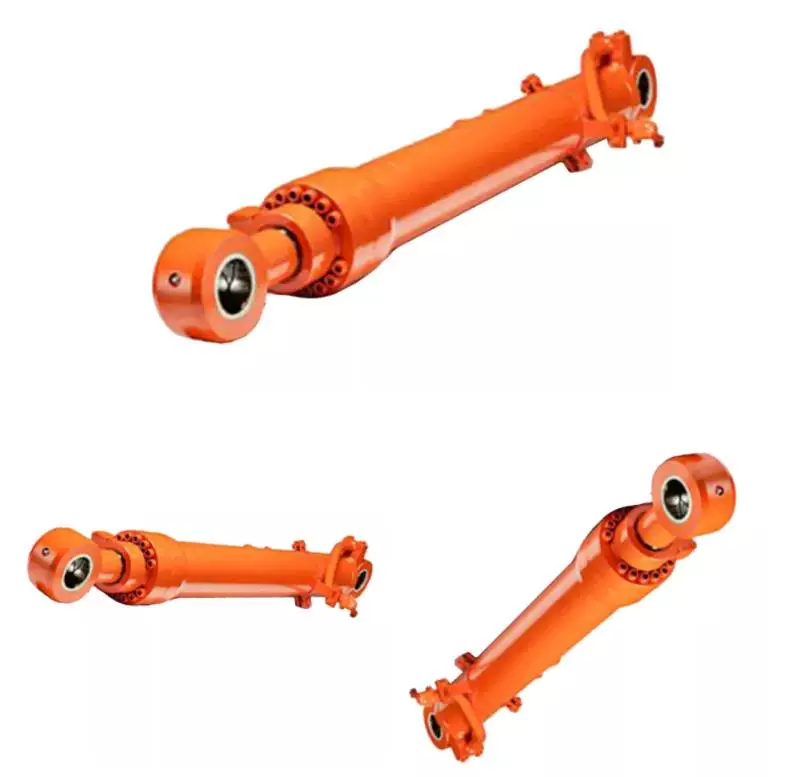
Product Description
Product detail Parameter
| Item | NominalCylinder Column diameter(mm) | Code | Effective resietance(Kn) | Column Sedimentation Force(kn) | Spherical Radius of Column Head(mm) | Spherical Radius of Cylinder Bottem | Diameter of connection bore of column head(mm) | ||||||||||
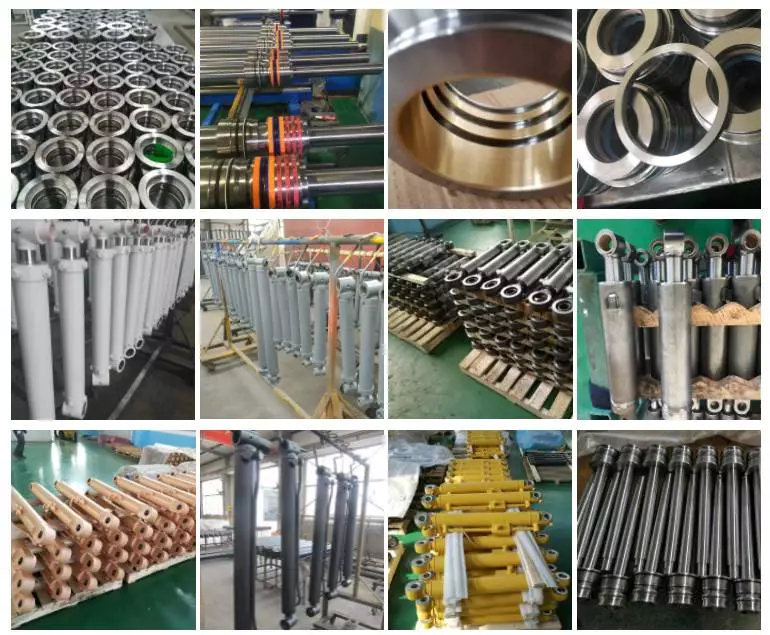
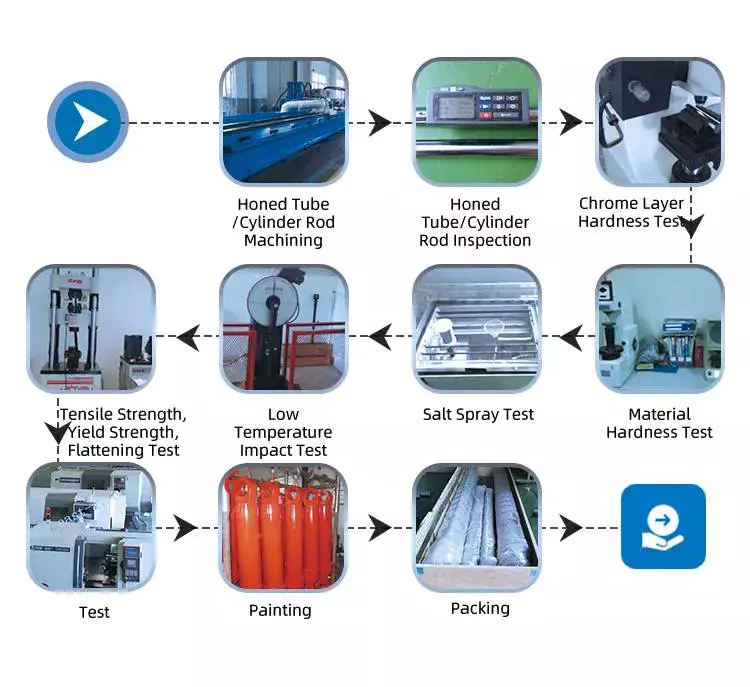
| 1 | 180/165 | LJGGN18675628D2G | 11 square meters,with 500 employees *Capacity:Annual production of more than 200,000 sets *Equipment:700set ,invested a large amount of money in introducing 1 electroplating production line. *Certificate:ISO9001,ISO/TS16949,ABS,AQA etc *Delivery time:20 Days *Service:52 Service Outlets nationwide,24-hour Service *Accept Custom 2.produce line 1.Raw materials entering the factory, 27SiMn, 40CrMo, ST52, 45# steel tubes or bars for choice 2.Do the pre-treatment including pickling, phosphating and saponification, and then cold-draw the seamless steel tubes. 3.Put the steel tubes into the tempering CHINAMFG to do the stress relief annealing in convenience of the subsequent the processing 4.Multi-roll straightening machine, with 10 straightening points, achieves the automatic rolling straighten, improving the efficiency greatly 5.Heat treatment to obtain workpieces with different properties by changing their internal microstructure or surface chemical composition 6.Cylindrical degree can be controlled within 0.03mm and the surface roughness is up to 0.4 by honing with range:φ40mm-φ450mm and longest length: 12000mm 7.Machining processes to obtain high precision parts with complex shapes strictly according to the detailed drawings 8.Electroplating production processfulfillsthe functional and ornamental requirements for coating workpieces of different dimensions according to specific application requirements. 9.Cleaning all the parts by automatic cleaning machine in the special solution and under specific temperature control effectively 10.All the parts are assembledinto complete cylinders according to the strict assemblyinstructions by skillful workers in dust-free workshop. 11.Do proof pressure and performance tests to check whether the cylinders can operate smoothly and stably under the specified pressurewith no leakage and deformation 12.Do the painting including high quality primer and topcoat to obtain beautiful appearanceand protect the cylinders against the anticorrosion. 13.Wooden palletor boxes packing with plastic films wrapped on the surface, suitable for long-time sea transport 3.Quality guarantee system
Program before Delivery 1. Trial Operation Test 2. Start-up Pressure Test 3. Pressure-Tight Test 4. Leak Test 5. Full Stroke Test 6. Buffer Test 7. Testing the Effect of Limit 8. Load Efficiency Test 9. Reliability Test Every piece of hydraulic cylinder are tested and will send out only after they are pasted the each test
4.Guarantee and after sale service:
5.Certificate 6.Why Wantong? 1.Complete Manufacturing Processes: 2.Strict Quality Control system: 3.Rich Market Experiences: 7..Dream
8.FAQ:
What advancements in hydraulic cylinder technology have improved energy efficiency?Advancements in hydraulic cylinder technology have led to significant improvements in energy efficiency, allowing hydraulic systems to operate more efficiently and reduce energy consumption. These advancements aim to minimize energy losses, optimize system performance, and enhance overall efficiency. Here’s a detailed explanation of some key advancements in hydraulic cylinder technology that have improved energy efficiency: 1. Efficient Hydraulic Circuit Design: – The design of hydraulic circuits has evolved to improve energy efficiency. Advancements in circuit design techniques, such as load-sensing, pressure-compensated systems, or variable displacement pumps, help match the hydraulic power output to the actual load requirements. These designs reduce unnecessary energy consumption by adjusting the flow and pressure levels according to the system demands, rather than operating at a fixed high pressure. 2. High-Efficiency Hydraulic Fluids: – The development of high-efficiency hydraulic fluids, such as low-viscosity or synthetic fluids, has contributed to improved energy efficiency. These fluids offer lower internal friction and reduced resistance to flow, resulting in decreased energy losses within the system. Additionally, advanced fluid additives and formulations enhance lubrication properties, reducing friction and optimizing the overall efficiency of hydraulic cylinders. 3. Advanced Sealing Technologies: – Seal technology has advanced significantly, leading to improved energy efficiency in hydraulic cylinders. High-performance seals, such as low-friction or low-leakage seals, minimize internal leakage and friction losses. Reduced internal leakage helps maintain system pressure more effectively, resulting in less energy waste. Additionally, innovative sealing materials and designs enhance durability and extend seal life, reducing the need for frequent maintenance and replacement. 4. Electro-Hydraulic Control Systems: – The integration of advanced electro-hydraulic control systems has greatly contributed to energy efficiency improvements. By combining electronic control with hydraulic power, these systems enable precise control over cylinder operation, optimizing energy usage. Proportional or servo valves, along with position or force feedback sensors, allow for accurate and responsive control, ensuring that hydraulic cylinders operate at the required level of performance while minimizing energy waste. 5. Energy Recovery Systems: – Energy recovery systems, such as hydraulic accumulators, have been increasingly utilized to improve energy efficiency in hydraulic cylinder applications. Accumulators store excess energy during low-demand periods and release it when there is a peak demand, reducing the need for the hydraulic pump to provide the full power continuously. By utilizing stored energy, these systems can significantly reduce energy consumption and improve overall system efficiency. 6. Smart Monitoring and Control: – Advancements in smart monitoring and control technologies have enabled real-time monitoring of hydraulic systems, allowing for optimized energy usage. Integrated sensors, data analytics, and control algorithms provide insights into system performance and energy consumption, enabling operators to make informed decisions and adjustments. By identifying inefficiencies or suboptimal operating conditions, energy consumption can be minimized, leading to improved energy efficiency. 7. System Integration and Optimization: – The integration and optimization of hydraulic systems as a whole have played a significant role in improving energy efficiency. By considering the entire system layout, component sizing, and interaction between different elements, engineers can design hydraulic systems that operate in the most energy-efficient manner. Proper sizing of components, minimizing pressure drops, and reducing unnecessary piping or valve restrictions all contribute to improved energy efficiency of hydraulic cylinders. 8. Research and Development: – Ongoing research and development efforts in the field of hydraulic cylinder technology continue to drive energy efficiency advancements. Innovations in materials, component design, system modeling, and simulation techniques help identify areas for improvement and optimize energy usage. Additionally, collaboration between industry stakeholders, research institutions, and regulatory bodies fosters the development of energy-efficient hydraulic cylinder technologies. In summary, advancements in hydraulic cylinder technology have resulted in notable improvements in energy efficiency. Efficient hydraulic circuit designs, high-efficiency hydraulic fluids, advanced sealing technologies, electro-hydraulic control systems, energy recovery systems, smart monitoring and control, system integration and optimization, as well as ongoing research and development efforts, all contribute to reducing energy consumption and enhancing the overall energy efficiency of hydraulic cylinders. These advancements not only benefit the environment but also offer cost savings and improved performance in various hydraulic applications.
Handling Challenges of Different Fluid Viscosities in Hydraulic CylindersHydraulic cylinders are designed to handle the challenges associated with different fluid viscosities. The viscosity of hydraulic fluid can vary based on temperature, type of fluid used, and other factors. Hydraulic systems need to accommodate these variations to ensure optimal performance and efficiency. Let’s explore how hydraulic cylinders handle the challenges of different fluid viscosities:
In summary, hydraulic cylinders employ various strategies to handle the challenges associated with different fluid viscosities. By selecting appropriate fluids, incorporating viscosity compensation mechanisms, controlling temperature, implementing efficient filtration, and ensuring proper lubrication, hydraulic cylinders can accommodate variations in fluid viscosity. These measures enable hydraulic systems to deliver consistent performance, precise control, and efficient operation across different fluid viscosity ranges.
What benefits do hydraulic cylinders offer for tasks requiring heavy lifting or movement?Hydraulic cylinders offer numerous benefits for tasks that involve heavy lifting or movement. Their unique design and characteristics make them well-suited for applications that require substantial force, precise control, and reliable operation. Here are the detailed benefits that hydraulic cylinders provide for such tasks: 1. High Force Generation: – Hydraulic cylinders are capable of generating significant amounts of force. By utilizing hydraulic pressure, which can be easily amplified, hydraulic cylinders can exert substantial force to lift and move heavy loads. The force output of a hydraulic cylinder is directly proportional to the hydraulic pressure and the surface area of the piston. This high force capability makes hydraulic cylinders ideal for tasks that involve heavy lifting, pushing, or pulling. 2. Precise Control: – Hydraulic cylinders offer precise control over the force and motion they generate. By regulating the flow of hydraulic fluid into the cylinder, the speed, direction, and position of the cylinder’s movement can be accurately controlled. This level of control is crucial for tasks that require precise positioning, delicate movements, or synchronization of multiple cylinders. It enables operators to perform operations with accuracy and minimize the risk of damage or accidents. 3. Safety: – Hydraulic cylinders are designed with safety features to ensure the protection of both personnel and equipment. They incorporate overload protection mechanisms, such as relief valves, that prevent excessive force or pressure from damaging the system. Additionally, hydraulic cylinders allow for controlled and gradual movements, reducing the risk of sudden and uncontrolled motions that could pose safety hazards during heavy lifting or movement tasks. 4. Versatility and Adaptability: – Hydraulic cylinders are versatile components that can be adapted to meet specific requirements. They can be customized based on factors such as force capacity, stroke length, speed, and mounting options, allowing them to be integrated into various types of machinery. This versatility makes hydraulic cylinders suitable for a wide range of applications, including construction, material handling, mining, agriculture, and more. 5. Smooth and Controlled Operation: – Hydraulic cylinders provide smooth and controlled operation, ensuring efficient and reliable performance during heavy lifting or movement tasks. The hydraulic fluid acts as a cushioning medium, which helps dampen shocks and vibrations, resulting in smoother and quieter operation. This controlled operation also reduces the risk of damage to the load being lifted or the surrounding equipment. 6. Compact Design: – Hydraulic cylinders offer a high power-to-size ratio, allowing for compact machinery design. Their relatively small size, compared to the forces they can generate, makes them suitable for applications where space is limited or weight restrictions apply. This compact design enables the integration of hydraulic cylinders into different types of equipment without compromising performance or efficiency. 7. Durability and Reliability: – Hydraulic cylinders are built to withstand rigorous operating conditions and provide long-term reliability. They are constructed with robust materials, precise machining, and effective sealing systems to ensure durability and prevent fluid leakage. Hydraulic cylinders can withstand high pressures, heavy loads, and continuous use, making them suitable for demanding tasks involving heavy lifting or movement. 8. Energy Efficiency: – Hydraulic cylinders contribute to energy efficiency in tasks requiring heavy lifting or movement. Hydraulic systems allow for the transfer of power over long distances without significant power losses. Additionally, hydraulic cylinders can incorporate energy-saving features such as load-sensing technology and regenerative circuits, which reduce energy consumption by optimizing the use of hydraulic fluid. In summary, hydraulic cylinders offer several benefits for tasks that involve heavy lifting or movement. They provide high force generation, precise control, safety features, versatility, smooth operation, compact design, durability, and energy efficiency. These advantages make hydraulic cylinders indispensable components in various industries where heavy loads need to be lifted, pushed, or moved with accuracy and reliability.
|